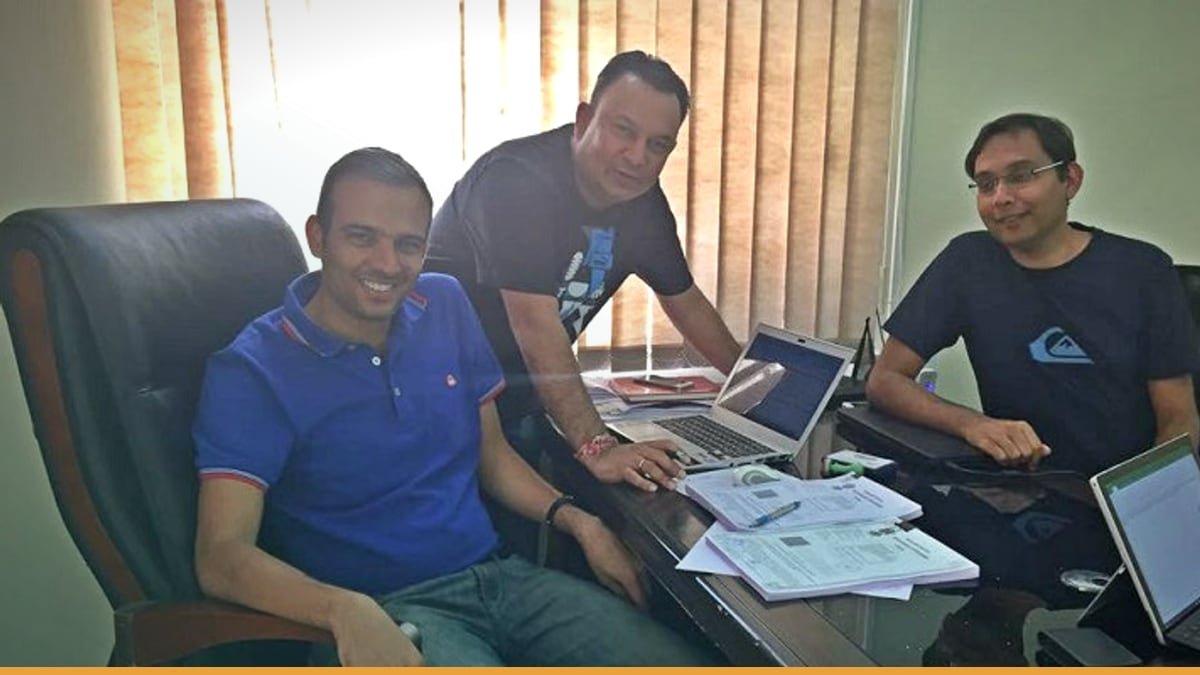
Header image source: On track to distribute Rs 2,000cr worth of loans, Finance Buddha might lend you the amount you need | YourStory via YourStory.com via Google — cropped to 16:9 and colour-adjusted.
Key takeaways
- Finance Buddha covers 19,000 pincodes across India with proprietary loan-matching tech
- IPO approval from NSE Emerge signals confidence in its advisory-driven aggregation model
- Revenue depends entirely on lender commissions tied to loan disbursals
Finance Buddha just got in-principle approval from NSE Emerge for an SME IPO. The Bengaluru-based digital loan aggregator covers 19,000 pincodes, works with banks and NBFCs, and calls itself “India’s top digital loan aggregator.” That’s not just bluster—its pincode reach is extensive, and its proprietary rules engine promises efficient matching.
But what does that actually mean? And why does this IPO matter?
How Finance Buddha Actually Works
Finance Buddha doesn’t lend money. It connects borrowers with lenders—banks and NBFCs—and takes a commission when loans get disbursed. That’s the simple part. The complicated part is how it does that.
When a borrower applies for a personal loan or home loan on Finance Buddha’s platform, the company’s rules engine evaluates the application against multiple lender criteria—credit score, income, employment type, loan amount—and matches it with the best offers. Borrowers see transparent comparisons, pick an offer, and Finance Buddha gets paid.
This isn’t just a comparison tool. The company describes itself as having an “advisory-driven approach,” which suggests something more than just listing APRs. That’s a real differentiator in a market where aggregators often treat loans like commodities.
Finance Buddha’s product lineup includes:
- Unsecured loans: Personal and business loans, up to ₹50 lakh.
- Mortgage loans: Home loans and loan against property (LAP).
- Insurance: Distributed on behalf of insurers, though details are scarce.
Revenue comes entirely from commissions or fees paid by lending partners. Payments are based on disbursals. That means Finance Buddha’s financial health is directly tied to loan volumes and the credit appetite of its partner banks and NBFCs.
Who Built This?
Finance Buddha was founded in 2012 by Vivek Bhatia, Parth Pande, and Parag Agarwal. The brief doesn’t say much about their backgrounds, but Chennai Angels invested in the company, citing the founders’ “domain competence and execution skills.” That’s a telling quote—it suggests they knew what they were doing in lending or fintech before starting Finance Buddha.
The company covers 19,000+ pincodes. For context, major lenders serve thousands of cities across India. Finance Buddha isn’t a lender, so the comparison isn’t perfect, but the scale is still impressive for a company that operates through partnerships rather than its own balance sheet.
The Tech Behind the Aggregation
Finance Buddha’s rules engine is its competitive edge. The brief doesn’t spell out the mechanics, but here’s how it likely works:
- Data Intake: Borrowers submit applications with personal, financial, and loan-specific details.
- Pre-Qualification: The engine screens applicants against lender eligibility criteria—minimum credit score, income thresholds, etc.
- Matching: The engine ranks lenders based on the borrower’s profile, loan requirements, and lender risk appetite.
- Advisory Layer: Borrowers get curated offers with transparent terms, repayment schedules, and fees—possibly with contextual guidance like, “This lender is best for self-employed borrowers.”
This isn’t just a database lookup. The "advisory-driven approach" implies dynamic decision-making to improve matches over time. For example, the engine would prioritise lenders based on their approval patterns for different applicant profiles.
The brief also mentions “quick approvals and fast disbursal.” That’s table stakes in digital lending, but Finance Buddha’s tech could be optimising for speed by:
- Pre-integrating with lender APIs to cut manual data entry.
- Using alternative data—bank transaction history, utility payments—for applicants with thin credit files.
- Automating document verification—Aadhaar, PAN, salary slips—via OCR or third-party services.
Why India Needs Loan Aggregators
India’s retail lending market is a mess. The country has numerous scheduled commercial banks and NBFCs, with growing demand for credit driven by digital adoption and financial inclusion.
For borrowers, this fragmentation is a nightmare. Comparing loan offers across banks is time-consuming, and many lenders have opaque eligibility criteria. Aggregators like Finance Buddha solve this by centralising discovery and simplifying the application process.
- Digital Adoption: India has a large number of internet users, with fintech adoption growing. UPI transactions have seen significant growth.
- 2. Regulatory Support: Regulatory guidelines mandate transparency in loan disbursals and fee structures, which benefits aggregators that can show clear comparisons.
- Underserved Segments: Self-employed borrowers, gig workers, and small businesses often struggle to access formal credit. Aggregators can match them with niche lenders.
Finance Buddha’s pincode coverage (19,000+) suggests it’s targeting both urban and semi-urban markets. That’s smart—Tier 2/3 cities are underserved by traditional lenders but have growing internet penetration and credit demand.
What the IPO Approval Really Means
Finance Buddha’s in-principle approval from NSE Emerge for an SME IPO is a big deal. Here’s why:
- Growth Ambitions: The company is positioning itself as a scalable, tech-driven financial services platform, not just another loan marketplace. An IPO would provide capital for expansion.
- Market Validation: NSE Emerge’s approval suggests confidence in Finance Buddha’s business model and financials. SME IPOs aren’t just about growth—they’re scrutinised for sustainability.
- Competitive Positioning: A successful IPO could elevate Finance Buddha’s profile, attracting more lender partnerships and borrowers.
The stated use of funds includes:
- Expanding reach—deeper pincode penetration or new product lines.
- Enhancing technology—upgrading the rules engine, improving fraud detection.
- Deepening market penetration in retail lending.
This isn’t just about raising capital. It’s about signalling maturity. Competitors have been exploring IPOs but haven’t pulled the trigger. Finance Buddha’s move could force other aggregators to accelerate their own fundraising plans.
How Finance Buddha Stacks Up Against Competitors
Finance Buddha isn’t alone in this space, but its differentiators are worth examining:
| Competitor | Model | Key Differentiators | Finance Buddha’s Edge | |———————-|————————————|————————————————–|———————————————–| | BankBazaar | Loan and credit card aggregator | Strong brand, partnerships with major banks | Proprietary rules engine, advisory approach | | Paisabazaar | Loan and insurance aggregator | Backed by Policybazaar, large marketing budget | Pan-India pincode coverage (19,000+) | | KreditBee | Direct digital lender | Focus on salaried and self-employed borrowers | Works with multiple lenders, not just its own | | MoneyTap | Hybrid aggregator/direct lender | Offers revolving credit lines | Wider product range (home loans, LAP) |
Finance Buddha’s claim to being “India’s top digital loan aggregator” isn’t baseless. Its pincode coverage and proprietary tech give it scale advantages over smaller players. But competitors have stronger brand recognition and deeper pockets for marketing.
The real threat might come from new entrants. New entrants with strong distribution ecosystems could disrupt the aggregator space. Finance Buddha’s IPO could be a preemptive strike to secure capital before such competitors ramp up.
Risks and Challenges
Finance Buddha’s model isn’t without risks:
- Dependence on Lending Partners: Its revenue is tied to loan disbursals. If partner banks or NBFCs tighten credit, volumes could plummet. The brief doesn’t mention diversification into non-loan products like insurance or investments, which could mitigate this risk.
- Tech Risks: The rules engine must stay ahead of fraudsters and comply with evolving RBI guidelines. Any failure here could erode lender trust.
- Competition: Competitors have stronger brand recall, while direct lenders can offer faster disbursals by underwriting in-house.
- IPO Execution: SME IPOs face higher volatility and lower liquidity. A botched listing could damage investor confidence.
There’s also the question of unit economics. The brief doesn’t disclose margins or customer acquisition costs. Aggregators typically operate on thin margins, so scale is critical. Finance Buddha’s pincode coverage suggests it’s achieved scale, but the IPO prospectus will need to prove profitability.
Where Does Finance Buddha Go From Here?
Finance Buddha’s post-IPO plans are clear: expand reach, enhance tech, and deepen market penetration. But the long-term vision could be more ambitious. Here’s what might come next:
- New Product Lines: The company could add BNPL or credit cards to its portfolio, leveraging its lender partnerships.
- Full-Stack Fintech: It could evolve into a one-stop shop for lending, insurance, and investments—similar to Policybazaar’s model but with a stronger tech backbone.
- International Expansion: India’s digital lending boom is a template for other emerging markets—Indonesia, Nigeria. Finance Buddha’s tech could be exportable.
The most interesting question is whether Finance Buddha can transition from a loan aggregator to a financial services platform without alienating its lender partners. Aggregators thrive on neutrality—if Finance Buddha starts underwriting loans itself or favouring certain lenders, it risks losing trust. The advisory-driven approach could be the key here, positioning the company as a trusted intermediary rather than a competitor.
Is Finance Buddha a Big Deal?
Finance Buddha is a well-executed niche player in India’s fintech ecosystem. It’s not revolutionary—loan aggregation has been around for years—but its proprietary tech, pincode coverage, and IPO ambitions make it a company to watch.
The IPO isn’t just about raising capital. It’s a bet that India’s retail lending market is big enough for multiple aggregators to thrive, and that Finance Buddha’s tech-driven model can outpace competitors. If successful, it could set a precedent for other digital loan aggregators, proving that scale and specialisation—not just brand recognition—can win in fintech.
The open question is whether Finance Buddha can maintain its neutrality while expanding. Aggregators succeed by being Switzerland—neutral, transparent, and borrower-friendly. If the IPO changes that, the company risks becoming just another sales channel for banks. But if it can balance growth with trust, Finance Buddha could redefine what it means to be a loan aggregator in the digital age.