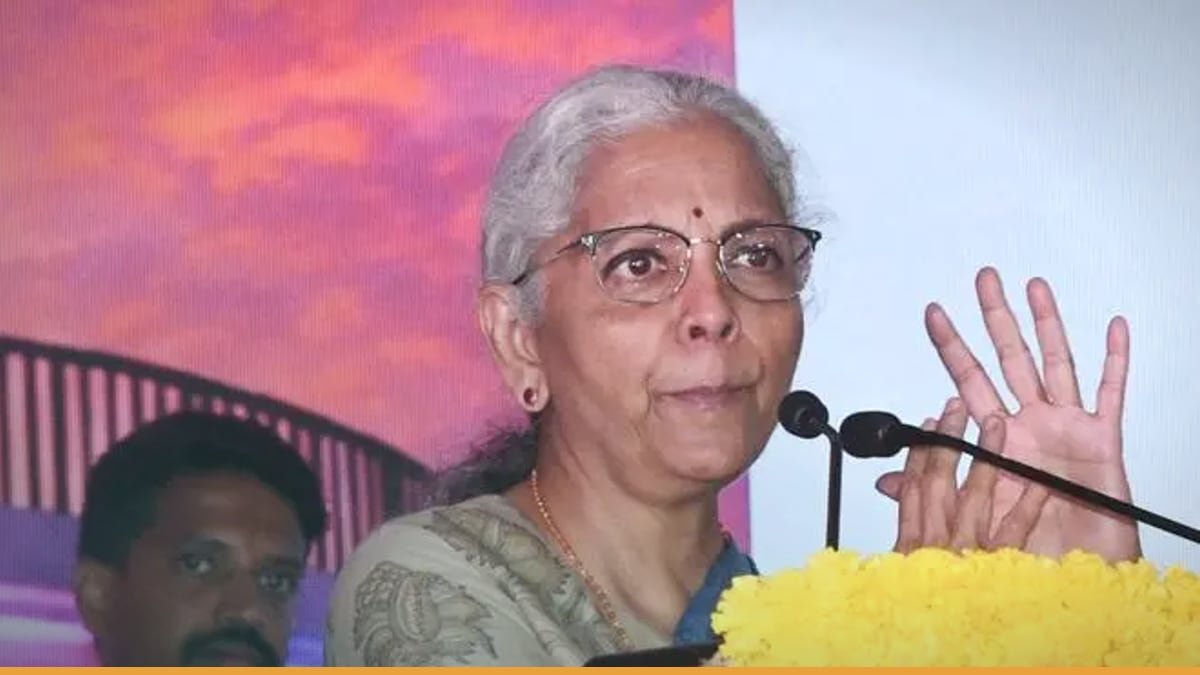
Header image source: Why is Nirmala Sitharaman being replaced, and will a new Finance Minister change India’s economy? – Frontline via Frontline – The Hindu via Google — cropped to 16:9 and colour-adjusted.
Key takeaways
- No official confirmation of Sitharaman’s replacement
- Shaktikanta Das is the most likely successor
- Timing tied to budget cycle and RBI policy shifts
No, Nirmala Sitharaman isn’t packing her bags tomorrow. But the rumours aren’t just background noise—they’re a symptom of something gnawing at the BJP. Nine straight Union Budgets. Missed inflation targets. A jobs crisis she only acknowledged last month. The question isn’t whether the party is thinking about replacing her. It’s whether they’ve found someone who can do the job better without sending markets into a tailspin. Right now? Probably not yet. But the clock is ticking.
The Direct Answer: Is Sitharaman Out?
Cut the suspense. There’s zero official confirmation that Nirmala Sitharaman is being replaced. No resignation letter, no PMO press release, no cryptic tweet from Amit Shah. What we’ve got instead is Delhi’s favourite pastime: the whisper campaign. Meetings between Prime Minister Narendra Modi, President Droupadi Murmu, and Home Minister Amit Shah have fuelled speculation that a cabinet reshuffle is coming. The chatter points to Sitharaman being moved to the Human Resource Development (HRD) ministry—a lateral shift, not a demotion, but one that would strip her of the finance portfolio she’s held since 2019.
The strongest evidence against an imminent change? She’s still in the job. Sitharaman hasn’t been sidelined in public appearances, hasn’t skipped any major economic reviews, and remains the face of the government’s fiscal policy. More importantly, she’s delivered nine consecutive Union Budgets—a record for any Indian finance minister. That’s not the CV of someone being shown the door. But it is the CV of someone who’s exhausted the patience of traders, small businesses, and even some BJP MPs. The real question isn’t if the BJP is considering a change. It’s when the economic pain becomes too loud to ignore.
The Political Context: Why Now?
Timing isn’t just everything in politics—it’s the only thing. The speculation around Sitharaman’s future isn’t happening in a vacuum. It’s tied to three specific events:
- The post-Budget lull. The Union Budget for 2024-25 was presented in July. It didn’t spark outrage, but it didn’t deliver the bold relief measures middle-class voters and small businesses were hoping for either. No major tax cuts. No stimulus packages. The lack of fireworks has left many wondering: if not now, when? A reshuffle before the next Budget (due February 2025) would signal a shift in economic priorities—but it would also risk looking like an admission of failure.
- The RBI factor. Shaktikanta Das, the current RBI governor, has been named in multiple reports as a potential replacement. Das is a former economic affairs secretary who’s spent the last six years at the helm of the RBI. There, he’s earned praise for managing inflation and liquidity during crises like the IL&FS collapse and the pandemic. Bringing him into the finance ministry would be a technocratic move, one that could reassure markets and signal a more data-driven approach to fiscal policy. But there’s a catch: Das isn’t just another bureaucrat. He’s the sitting RBI governor. His departure would require careful orchestration to avoid disrupting monetary policy.
- The 2024 election hangover. The BJP’s performance in the general elections was underwhelming. Modi remains the party’s undisputed leader, but there’s a sense that the government needs to recalibrate its messaging. Sitharaman’s tenure has been marked by a defensive posture—downplaying inflation, delaying job data releases, framing economic challenges as global rather than domestic. If the BJP wants to pivot toward a more pro-growth, pro-middle-class narrative, swapping out the finance minister could be a way to reset the conversation.
The meetings between Modi, Murmu, and Shah suggest a reshuffle is at least on the table. But reshuffles in the Modi government aren’t just about competence. They’re about optics, loyalty, and control. Unless the economic numbers force his hand, he’s unlikely to push her out abruptly. That said, if the rumours are true and she’s moved to HRD, it would signal the BJP is prioritising education reform over fiscal policy in the near term. Whether that’s strategic or a face-saving exit remains to be seen.
Economic Performance Under Sitharaman: The Case for Change
Let’s talk numbers. Because while Sitharaman has survived multiple crises, the economic report card under her watch is far from stellar.
- Inflation and oil prices. One of the sharpest criticisms of Sitharaman’s tenure has been her handling of inflation, particularly the impact of rising oil prices. In 2022, when global crude prices spiked following Russia’s invasion of Ukraine, Sitharaman downplayed the domestic impact. She argued India’s inflation wasn’t as high as in other countries. Sitharaman’s assurances did little to ease the pain.
- The jobs crisis. For years, the government avoided acknowledging India’s unemployment problem. It wasn’t until June 2024—more than a decade after the jobs crisis began—that Sitharaman publicly admitted unemployment was a "serious issue. "
- Taxation and small businesses. The middle class and small traders have been vocal in their frustration with Sitharaman’s budgets. Despite repeated demands for income tax relief, the basic exemption limit has remained unchanged at ₹2.5 lakh since 2014. The government’s "Ease of Living" commitment, touted in PIB releases, has done little to translate into ease of doing business for the average trader.
- Growth vs. inequality.
The counterargument? Global headwinds. The pandemic, supply chain disruptions, geopolitical tensions—these have made governing harder for every finance minister. But here’s the thing: voters don’t care about global headwinds. They care about whether their salaries are keeping up with inflation. Whether their kids can find jobs. Whether their businesses are surviving. On those metrics, Sitharaman’s tenure has been underwhelming. If the BJP wants to regain lost ground with the middle class and small traders, a change at the top could signal a course correction.
The Shaktikanta Das Factor: A Credible Alternative?
If Sitharaman is replaced, the most likely successor is Shaktikanta Das. But his appointment wouldn’t be straightforward.
Since 2018, he’s been the RBI governor.
Why does he fit the bill?
- Market credibility. Das is respected by investors and economists. His appointment would send a signal that the government is prioritising stability and competence over political loyalty.
- Experience with fiscal-monetary coordination. As RBI governor, Das has worked closely with the finance ministry on issues like bond market liquidity and banking sector reforms. That experience could help bridge the gap between monetary and fiscal policy—a chronic weakness in India’s economic governance.
- Technocratic approach. Das is not a politician. That could be an advantage in a role that requires data-driven decision-making. His budgets might be less about grand announcements and more about structural reforms.
But there are major hurdles:
- He’s still the RBI governor. His sudden departure could disrupt monetary policy at a time when inflation is still volatile. The RBI’s Monetary Policy Committee (MPC) meets every two months. Das’s leadership has been crucial in managing expectations. Replacing him mid-term would require a seamless transition**—something that’s easier said than done.
- No political base. That could make it harder for him to navigate the bureaucracy and push reforms through a system that’s often resistant to change.
- The optics of a bureaucrat in charge. While Das is highly respected, his appointment could be seen as a sign of desperation—a move to bring in an outsider to clean up a mess.
If Modi does go with Das, the most likely scenario is a phased transition. Das could be appointed as Minister of State for Finance first, giving him time to ease into the role before taking over fully. But even that would be a bold move—one that signals the government is serious about addressing economic concerns head-on.
The HRD Ministry Rumor: A Demotion or Strategic Move?
If Sitharaman is replaced, the rumours suggest she’ll be moved to the Human Resource Development (HRD) ministry. On paper, this isn’t a demotion—HRD is a key portfolio, overseeing India’s education system, universities, and skill development programs. But in practice, it would be a significant step down from finance, the second-most important ministry in any government after home affairs.
Why would the BJP make this move?
- Education reform as a priority. The BJP has long talked about overhauling India’s education system, from revamping school curricula to boosting vocational training. The National Education Policy (NEP) 2020 was a major step in this direction, but implementation has been slow.
- A face-saving exit. If the BJP wants to ease Sitharaman out without admitting failure, HRD is a plausible landing spot. It allows her to save face while freeing up the finance ministry for someone new.
- Political messaging. Moving a senior woman leader to HRD could be framed as a progressive move, especially if the government wants to highlight its commitment to gender representation in key ministries.
But there are risks:
- Perception of failure. Even if the move is framed as a strategic redeployment, it will be hard to avoid the narrative that Sitharaman was replaced because of economic mismanagement.
- Lack of expertise. While she’s a quick learner, HRD is a complex ministry with its own challenges—university funding, teacher shortages. A steep learning curve could limit her effectiveness.
- Distraction from economic issues. If the BJP’s goal is to reset its economic agenda, moving Sitharaman to HRD might not be enough. The finance ministry would still need a clear, bold vision—something that’s been lacking in recent years.
Historical precedent offers some clues.
The Timing Question: When Would a Change Happen?
If a reshuffle is coming, when would it happen? The answer depends on three key triggers:
- Post-Budget 2025 (February 2025).
The Union Budget is the biggest economic event of the year. Any major changes to the finance ministry would likely happen after it’s presented. If Sitharaman delivers a lacklustre Budget—one that fails to address inflation, unemployment, or tax relief—Modi might see it as an opportunity to bring in fresh leadership for the next fiscal year. Scenario: Sitharaman presents Budget 2025 in February. The markets react poorly. Modi announces a reshuffle in March or April 2025.
- Ahead of state elections (late 2025).
If the party is worried about anti-incumbency sentiment, a cabinet reshuffle could be a way to reset its narrative. Swapping out the finance minister could be framed as a proactive move to address economic concerns—even if the real impact takes years to materialise. Scenario: The BJP loses ground in opinion polls ahead of state elections. Modi uses a reshuffle to signal a new direction.
- After RBI policy shifts (late 2024).
If Das is indeed the replacement, his transition would need to be carefully timed to avoid disrupting the RBI’s monetary policy. The Monetary Policy Committee (MPC) meets every two months. Das’s departure would require a smooth handover to his successor. The most likely window for this would be after the December 2024 MPC meeting, when Das’s term ends. Scenario: Das’s term as RBI governor concludes in December 2024. He’s immediately appointed as finance minister in January 2025.
Current status: As of now, there’s no immediate sign of a reshuffle. But that doesn’t mean it won’t happen. The BJP has a history of springing surprises—from demonetisation to the 2019 Balakot airstrikes. The Modi government thrives on sudden, dramatic moves. If economic indicators worsen in the coming months, a mid-term change can’t be ruled out.
Market and Public Reaction: What’s at Stake?
Any change in the finance ministry would have immediate ripple effects—both in the markets and among voters.
- Market reaction.
Sudden changes in finance leadership can spook investors, especially if they’re seen as a response to policy failures. Shaktikanta Das’s appointment would likely be well-received by markets, given his track record at the RBI. But if the change is seen as politically motivated—moving Sitharaman out to appease allies—it could erode confidence. Key risk: A knee-jerk sell-off in bonds and equities if the reshuffle is perceived as chaotic or poorly planned.
- Public perception.
Middle-class voters and small businesses have been frustrated with Sitharaman’s budgets. If her replacement is seen as more responsive to their concerns, it could boost the BJP’s image ahead of state elections. Taxpayers would be watching closely for income tax relief—something Sitharaman has avoided in recent Budgets.
- Bureaucratic disruption.
Key challenge: Ensuring policy continuity while also signalling new priorities. If the transition is poorly managed, it could lead to delays in decision-making—something India’s economy can ill afford.
Bottom line: A gradual transition—Das joining as MoS first—would be less disruptive than an abrupt replacement. But even a well-managed change would reset expectations. For better or worse.
The Modi Factor: How Much Does Trust Matter?
At the end of the day, this isn’t just about economics. It’s about Narendra Modi’s trust in Nirmala Sitharaman.
Sitharaman is a Modi loyalist. She was handpicked for the finance ministry in 2019, replacing Arun Jaitley after his health declined.
But loyalty alone isn’t enough. The finance ministry isn’t just about following orders—it’s about delivering results. And on that front, Sitharaman’s record is mixed at best. Unemployment remains stubbornly high.
Modi’s calculus likely comes down to three questions:
- Can Sitharaman turn things around? If she delivers a strong Budget 2025, the pressure for a reshuffle might ease. But if the numbers don’t improve, Modi may decide he needs fresh leadership.
- Is there a better alternative? Das is the most credible name in the mix, but his RBI role complicates things. If Modi can’t find a suitable replacement, he may stick with Sitharaman out of necessity.
- What’s the political cost of keeping her? If the middle class and small traders continue to blame Sitharaman for their economic woes, Modi may decide that replacing her is less risky than keeping her.
Alternative scenario: If a reshuffle happens, it might not be just about finance. If Modi decides to shake things up, Sitharaman’s move could be part of a larger overhaul.
What’s the Most Likely Outcome?
Here’s the base case:
- No immediate change. Sitharaman stays on through Budget 2025 (February 2025). Any reshuffle happens afterwards.
- Das joins as MoS first. If Modi wants to test the waters, Das could be brought in as Minister of State for Finance before taking over fully.
- HRD as a landing spot. If Sitharaman is moved, it’ll be to HRD—framed as a strategic move, not a demotion.
Bull case for change:
- If economic indicators worsen—inflation spikes, growth slows, unemployment rises—Modi may act sooner, possibly before state elections in late 2025.
- If market sentiment turns negative, a new finance minister could be a way to restore confidence.
Wildcard:
- A surprise move—like Das taking over mid-term—could signal urgency. But there’s no evidence this is being considered.
Final take: The speculation is real, but premature. The BJP isn’t going to make a knee-jerk decision on the finance ministry unless the economic pain becomes too loud to ignore. For now, the safest bet is continuity. But watch the post-Budget developments. If the numbers don’t improve, February 2025 could be the inflection point. The question isn’t whether Modi can replace Sitharaman. It’s whether he needs to. And right now, the answer depends on how much longer the patience of India’s middle class can hold.