Tag: CFO

  • **Finance vs. Accounting?: What the Evidence Actually Shows**

    **Finance vs. Accounting?: What the Evidence Actually Shows**

    Header image source: Accounting vs Finance Degree: What’s Right For Me? | Franklin.edu via Franklin University via Google — cropped to 16:9 and colour-adjusted.

    Key takeaways

    • Accounting records past transactions using strict GAAP rules
    • Finance uses economic theories for forward-looking decisions
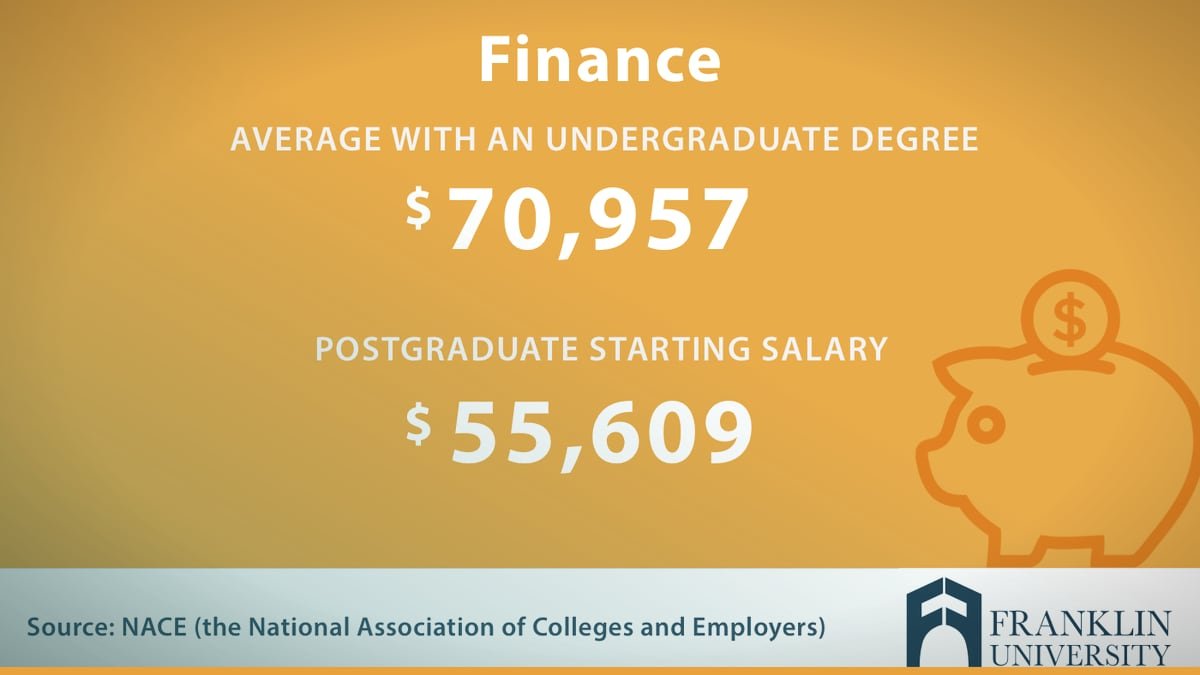
    • Finance careers often pay more but demand more strategic judgment

    Finance and accounting are not the same thing. Full stop. Accounting is the meticulous, rules-bound process of recording what has already happened—transactions, expenses, revenues—so financial statements can be produced with precision. Finance is the analytical, forward-looking discipline that uses those statements (and other data) to predict, model, and optimize what should happen next: investments, capital allocation, risk management. This isn’t some subtle nuance. It’s a fundamental divide in temporal orientation, methodology, and career trajectory.

    The data doesn’t lie. Accounting operates within rigid frameworks like GAAP and IFRS, dictating everything from revenue recognition to asset depreciation. Finance has no universal rulebook. Instead, it leans on economic theories—Capital Asset Pricing Model, efficient market hypothesis—and statistical tools like discounted cash flow models and Monte Carlo simulations. Harvard Business School Online puts it bluntly: finance is about strategic decision-making, while accounting is about compliance and reporting. That distinction shapes everything from the software professionals use to the salaries they command.


    Past vs. Future: The Core Divide

    Accounting is the historian of business. Every source confirms this. Becker CPA Review describes it as looking at past financial transactions and records. Southern New Hampshire University is even more direct: accounting generally works with existing records and documents. This isn’t a flaw—it’s the entire point. Accounting’s role is to produce accurate, auditable financial statements—balance sheets, income statements, cash flow statements—that stakeholders can trust. Without this retrospective rigor, finance would have no reliable data to work with.

    Finance is the strategist. Northwest Missouri State University notes it emphasizes analysis and forward-looking decisions. Frontline Source Group frames it as a contrast: accounting focuses on what has already happened, while finance focuses on what should happen next. This isn’t just semantics. A financial analyst building a discounted cash flow model to value a potential acquisition isn’t verifying past transactions—they’re making assumptions about future cash flows, discount rates, and terminal values. An accountant preparing a tax return is ensuring last year’s revenue and expenses were recorded correctly under IRS rules.

    The overlap exists. Both fields rely on financial statements. But accounting produces them. Finance interprets them to make decisions. This explains why finance professionals often work in dynamic, high-stakes environments—investment banking, private equity, corporate strategy—while accountants dominate roles requiring precision and compliance: auditing, tax advisory, regulatory reporting.


    Rules vs. Judgment: The Methodology Chasm

    Accounting is a discipline of constraints. GAAP and IFRS aren’t suggestions—they’re mandates. Harvard Business School Online highlights this: accounting operates within strict guidelines to ensure consistency. Under GAAP, revenue is recognized when earned, not when cash is received. This rule applies universally, whether you’re a multinational corporation or a local bakery. The rigidity is intentional. It ensures financial statements are comparable across companies and industries, which is critical for investors, regulators, and auditors.

    Finance has no such universal standards. It’s a field of trade-offs. Accounting.com puts it well: finance professionals weigh risk versus return, debt versus equity, and short-term versus long-term goals. These decisions aren’t governed by rules—they’re guided by economic theories, market conditions, and professional judgment. A CFO deciding whether to issue debt or equity to fund an expansion isn’t following a playbook. They’re analyzing interest rates, credit markets, tax implications, and the company’s risk tolerance. A portfolio manager choosing between stocks and bonds isn’t verifying past transactions—they’re forecasting future returns based on macroeconomic trends, sector performance, and company fundamentals.

    This methodological divide has real consequences. Auditors verify compliance with GAAP. CFOs decide whether to acquire a competitor based on projected synergies. One is about accuracy. The other is about strategy. One is backward-looking. The other is forward-looking. One is rules-bound. The other is judgment-driven.


    Tools of the Trade: Precision vs. Prediction

    The tools professionals use reflect these differences sharply.

    Accounting’s toolkit is built for precision and compliance. ERP systems like QuickBooks, SAP, and Oracle dominate the field. These platforms handle invoicing, payroll, financial reporting—ensuring transactions are recorded accurately and reconciled properly. Tax software like TurboTax and CCH ProSystem fx automates compliance with ever-changing tax laws. The focus here is on accuracy, audit trails, and regulatory adherence. Becker notes that accounting professionals spend significant time reconciling accounts and ensuring financial statements are error-free.

    Finance’s toolkit is built for analysis and prediction. Bloomberg Terminals provide real-time market data, news, and analytics for traders and portfolio managers. Python and R are used to build predictive models, backtest trading strategies, and analyze large datasets. Platforms like Tableau and Power BI visualize financial trends and performance metrics. Finance professionals rely on sophisticated models—discounted cash flow for valuation, Black-Scholes for options pricing, Value at Risk for risk assessment. Northwest Missouri State University notes that finance students learn to use these tools to evaluate investment opportunities, manage risk, and optimize financial performance.

    AI is reshaping both fields—but differently. In accounting, AI automates repetitive tasks: data entry, invoice processing, fraud detection. Machine learning algorithms flag anomalies in expense reports or predict tax liabilities based on historical data. Human oversight remains critical for tasks requiring judgment—interpreting complex tax laws, signing off on audits. In finance, AI powers predictive analytics: credit scoring, algorithmic trading, portfolio optimization. Machine learning models analyze market trends, predict stock prices, identify investment opportunities. But finance professionals must still interpret these outputs, assess their reliability, and make final decisions.


    Career Paths: Salaries, Specializations, and Trade-Offs

    The career trajectories in finance and accounting diverge sharply—reflecting their distinct focuses.

    Accounting’s specialization is both its strength and its limitation. Roles like Certified Public Accountant, auditor, and tax advisor demand deep expertise in regulations and compliance. Accounting jobs typically require a bachelor’s degree, often with additional certifications—CPA, Certified Management Accountant. The Big 4—Deloitte, PwC, EY, KPMG—dominate the industry, offering clear career paths from staff accountant to manager to partner. But the work can be repetitive, with busy seasons—tax season, quarterly reporting—demanding long hours. Salaries reflect this specialization. A staff accountant earns a competitive salary. A CPA in a Big 4 firm can earn substantial compensation with experience.

    Finance’s breadth offers more variety—but also more competition. Careers span investment banking, corporate finance, asset management, financial planning. Northwest Missouri State University highlights that finance graduates study corporate finance, investments, financial markets, and risk management. Roles like investment banker, financial analyst, portfolio manager demand strong analytical skills and the ability to thrive under pressure. Salaries in finance are typically higher. An investment banking analyst can earn substantial compensation in their first year. Hedge fund managers or private equity associates can earn high compensation. But the hours are brutal—long work weeks are common in investment banking—and the career ladder is steep.

    The hybrid path is increasingly common. Many professionals start in accounting to build technical skills and earn certifications—CPA—before transitioning to finance. The Chartered Financial Analyst designation is a popular bridge, offering deep training in investment analysis, portfolio management, and financial modeling. This path combines the rigor of accounting with the strategic focus of finance, making it ideal for roles like financial planning and analysis, corporate development, or asset management.


    Education: What You Learn—and Why It Matters

    The curricula for finance and accounting majors reflect their distinct priorities—no surprises there.

    Accounting programs drill into technical skills and regulatory knowledge. Students master GAAP and IFRS, learning how to record transactions, prepare financial statements, and comply with tax laws. Courses cover auditing, tax accounting, managerial accounting, forensic accounting. Accounting students spend significant time learning to use tools for financial modeling and data management. The goal? Graduates who can ensure accuracy and compliance in financial reporting.

    Finance programs prioritize analytical and strategic thinking. Students study corporate finance—capital budgeting, cost of capital—investments—portfolio management, asset pricing—financial markets—equities, fixed income, derivatives—and risk management. SNHU notes that finance students learn to analyze financial data, assess risk, and make strategic financial decisions. Courses often include statistical analysis, econometrics, and financial modeling using Python and R. The focus is on developing skills to forecast performance, evaluate investment opportunities, and optimize capital structure.

    Overlap exists, but it’s limited. Both majors require foundational courses in economics, statistics, and business law. Finance leans into quantitative methods and economic theory. Accounting emphasizes compliance and technical precision. A finance major might take behavioral finance to understand market irrationality. An accounting major might study forensic accounting to detect fraud.


    Industry Applications: Where Each Discipline Dominates

    The industries where finance and accounting thrive reflect their core strengths—compliance versus strategy.

    Accounting is critical in regulated industries where transparency is non-negotiable. Healthcare, government, nonprofits rely heavily on accountants to ensure adherence to regulations. Auditors verify financial statements. Tax professionals navigate complex tax laws. Frontline Source Group highlights that accounting is essential for ensuring that financial records are accurate and compliant with laws and regulations. Precision, accountability, risk mitigation—these are the priorities.

    Finance drives strategy in dynamic sectors where growth and innovation are paramount. Technology, private equity, venture capital are dominated by finance professionals evaluating investment opportunities, optimizing capital structure, managing risk. Harvard Business School Online notes that finance is more strategic and forward-looking, making it indispensable in industries where rapid decision-making is critical. CFOs in tech companies balance short-term cash flow needs with long-term growth investments. Portfolio managers in asset management allocate capital across asset classes to maximize returns.

    Public vs. private sectors further highlight these differences. In the public sector, accounting is vital for budgeting, auditing, regulatory compliance. Government agencies and nonprofits rely on accountants to manage funds transparently and ensure accountability. In the private sector, finance dominates capital markets—raising capital, managing investments, optimizing financial performance. But both fields operate across sectors. A CFO in a Fortune 500 company needs accounting expertise for accurate financial reporting and finance skills to guide strategic decisions.


    The AI Factor: Automation’s Double-Edged Sword

    AI is disrupting both fields—but in different ways, at different speeds.

    Accounting’s automation focuses on efficiency and accuracy. AI-powered tools handle repetitive tasks: data entry, invoice processing, bank reconciliations. Machine learning algorithms detect anomalies in financial data, flagging potential errors or fraud. AI can scan expense reports for duplicates or unusual spending patterns, reducing manual review. But human oversight remains critical for tasks requiring judgment—interpreting complex tax laws, signing off on audits. Becker notes that while AI can automate routine tasks, human accountants are still needed to provide strategic advice and ensure compliance.

    Finance’s AI adoption is more transformative. Machine learning models analyze vast datasets to predict market trends, optimize portfolios, assess credit risk. Algorithmic trading systems execute trades at speeds and volumes impossible for humans. Robo-advisors provide automated investment advice to retail investors. But finance professionals must still interpret these outputs, assess their reliability, and make final decisions. Northwest Missouri State University highlights that AI enhances predictive modeling but does not replace the need for human judgment in financial decision-making.

    Job security in both fields is evolving. Accounting roles focused on data entry and reconciliation are at risk of automation. Those requiring strategic advice and compliance expertise remain secure. Finance roles involving predictive modeling and risk assessment are becoming more data-driven. But the need for human judgment persists. The key for professionals in both fields? Develop skills that complement AI—critical thinking, strategic analysis, ethical judgment.


    Which Should You Choose? The Decision Isn’t Binary

    The choice between finance and accounting isn’t about which is "better. " It’s about which aligns with your strengths, interests, and ambitions. The evidence is clear: accounting is the foundation. Finance is the strategy. One records the past. The other shapes the future.

    Pick accounting if:

    • You thrive in structured, detail-oriented environments.
    • You enjoy working with rules and regulations.
    • You want a clear career path with specialized roles—CPA, auditor, tax advisor.
    • You’re comfortable with repetitive tasks and busy seasons—tax season, quarterly reporting.
    • You’re interested in industries where compliance is critical—healthcare, government, nonprofits.

    Pick finance if:

    • You prefer analytical, strategic thinking.
    • You enjoy modeling, forecasting, and risk assessment.
    • You want higher earning potential and dynamic career opportunities—investment banking, corporate finance, asset management.
    • You’re comfortable with ambiguity and high-pressure environments.
    • You’re interested in industries where growth and innovation are priorities—tech, private equity, venture capital.

    The hybrid path is worth considering. Start in accounting to build technical skills and earn certifications—CPA—before transitioning to finance. The CFA designation is a popular bridge, offering deep training in investment analysis and portfolio management. This path combines the rigor of accounting with the strategic focus of finance, making it ideal for roles like financial planning and analysis, corporate development, or asset management.

    The open question isn’t which field to choose. It’s how you’ll adapt as AI reshapes both. Will the next generation of accountants become more strategic advisors, leveraging AI for compliance but focusing on high-value insights? Will finance professionals rely even more on predictive models, or will human judgment regain primacy as markets grow more volatile? The divide between finance and accounting isn’t disappearing. But the lines between them might blur faster than anyone expects.


  • **What Is Finance in an MBA? A Data-Backed Breakdown of Its Role, Value, and Distinctions**

    **What Is Finance in an MBA? A Data-Backed Breakdown of Its Role, Value, and Distinctions**

    Header image: MBA Display by keisasaki, CC BY 2.0, via flickr via Openverse — cropped to 16:9 and colour-adjusted.

    Key takeaways

    • An MBA in Finance combines broad business leadership with specialized financial expertise
    • The degree targets mid-to-upper management and executive roles like CFO
    • Finance is among the most popular and highest-paying MBA concentrations

    An MBA in Finance isn’t about becoming a spreadsheet jockey. It’s about learning to weaponize financial expertise as a leadership lever—shaping strategy, driving decisions, and turning numbers into business impact. The distinction from a Master of Finance isn’t subtle: while the latter drills deep into quantitative analysis and financial theory, an MBA in Finance delivers both broad management training and targeted financial acumen. That dual engine is what makes the degree uniquely valuable for professionals who need to bridge the C-suite and the balance sheet.

    Here’s the core truth: An MBA in Finance is a graduate business degree with a financial specialization, designed for those who must make—or oversee—high-stakes financial decisions in a leadership context. It’s not a technical finance degree. It’s a management degree with a financial lens, covering asset management, investment strategy, and global markets, always within a framework of business leadership. If your sights are set on roles like CFO, VP of Finance, or investment banking director, this is the degree built for that trajectory.


    The Dual Engine: How an MBA in Finance Actually Works

    The MBA in Finance isn’t just finance courses stapled onto a generic MBA. It’s a deliberate fusion of broad business training and specialized financial expertise—and that distinction is everything. Here’s how it actually breaks down:

    The Breadth: Core Business Leadership

    Every MBA program, regardless of concentration, demands coursework in:

    • Leadership and organizational behavior: managing teams, navigating office politics, driving cultural change.
    • Business strategy: competitive analysis, market positioning, long-term planning.
    • Marketing management: customer behavior, branding, go-to-market strategies.
    • Operations and supply chain: optimizing processes, logistics, resource allocation.
    • Data-driven decision-making: using analytics to inform strategy, not just instinct.

    This is the business foundation that separates an MBA from a technical degree. It’s why an MBA in Finance graduate can step into leadership in healthcare, tech, manufacturing—not just finance. The degree doesn’t just teach you how to read a balance sheet. It teaches you how to use that balance sheet to steer a company.

    The Depth: Financial Specialization

    The finance concentration layers on targeted expertise in:

    • Financial decision-making processes: how companies allocate capital, evaluate investments, manage risk.
    • Global financial markets: how macroeconomic trends, interest rates, and geopolitical events shape financial strategies.
    • Investment strategy and portfolio management: building and managing assets for individuals, corporations, or institutional investors.
    • Corporate finance and valuation: assessing company worth, structuring deals, optimizing capital structure.

    The finance curriculum is designed to provide "an understanding of the finance decision-making process and insights into how financial markets function. " This isn’t about memorizing formulas. It’s about applying financial tools to real-world business challenges.

    Why This Dual Structure Actually Matters

    The magic of the MBA in Finance lies in how it integrates these two halves. A Master of Finance might teach you how to build a discounted cash flow model. An MBA in Finance teaches you how to use that model to convince a CEO to pivot the company’s strategy. It’s the difference between being a financial analyst and being the person who leads the finance team.

    Consider the CFO role. They don’t just crunch numbers. They shape the financial narrative of the company, advising the CEO on everything from capital allocation to mergers and acquisitions. That’s the kind of role an MBA in Finance is built for. The degree prepares graduates to "rise to top-level roles after years of experience in finance management," not just entry-level positions.

    The Data Point: Finance as a High-Value Concentration

    Finance isn’t just popular. It’s one of the most lucrative MBA concentrations. Finance ranks among the top 10 highest-paying MBA concentrations. That’s not surprising when you look at the career trajectories it enables. MBAs were almost five times more likely to choose finance as a concentration compared to other specializations. The numbers don’t lie: demand is strong, and ROI is real.


    The Leadership Dividend: Why the MBA in Finance Targets Executive Roles

    The MBA in Finance isn’t designed for entry-level roles. It’s explicitly built for mid-to-upper management and executive positions—where financial expertise intersects with leadership. Here’s the evidence:

    Career Trajectory: From Manager to Executive

    Graduates with an MBA in Finance typically progress from early career roles to mid-career positions to executive roles.

    The degree is recommended for those aiming for executive leadership, not just financial analysis. "An MBA in finance is a graduate-level degree that focuses on business and finance courses," and it’s "geared toward individuals wanting to take management courses in finance and expand their finance analytical and strategic skills. "

    Versatility Across Industries

    Unlike a Master of Finance—which is often finance-industry-specific—an MBA in Finance is valued in any sector where financial strategy intersects with leadership. Here’s where you’ll find finance MBAs:

    • Financial services: banks, asset management firms, insurance companies, private equity.
    • Consulting: McKinsey, BCG, Deloitte—where financial acumen is critical for advising clients.
    • Tech: FAANG companies, where finance teams manage everything from R&D budgets to M&A.
    • Healthcare: hospital systems and pharma companies, where financial strategy drives patient care and drug development.
    • Manufacturing: supply chain finance, capital investments, mergers.

    This versatility is a key advantage. If you’re in a finance role at a tech company, you’re not just managing budgets. You’re helping shape the company’s growth strategy, evaluate acquisitions, allocate resources across teams. That’s the cross-functional leadership the degree prepares you for.

    Concentration Popularity: A Signal of Demand

    The fact that finance is one of the most popular MBA concentrations isn’t just anecdotal. It’s backed by data. Research found that MBAs were almost five times more likely to choose finance compared to other specializations. That suggests strong perceived ROI, especially for roles like CFO or VP of Finance, where the combination of leadership and financial expertise commands a premium.


    The Curriculum: What You Actually Study (And Why It’s Not Just “Finance”)

    The curriculum of an MBA in Finance is where the dual engine of the degree becomes concrete. It’s not just a list of finance courses. It’s a deliberate blend of leadership training and financial expertise. Here’s what you’ll actually study:

    Core MBA Courses: The Business Foundation

    Every MBA student, regardless of concentration, takes a set of core courses covering business leadership fundamentals:

    • Leadership and organizational behavior: managing teams, navigating power dynamics, driving cultural change. This isn’t just theory. It’s about leading people, whether in finance or any other function.
    • Business strategy and competitive analysis: how companies position themselves in markets, respond to competitors, sustain long-term advantage. This is where finance meets big-picture thinking.
    • Marketing management: customer behavior, branding, go-to-market strategies. Finance leaders need to know how marketing investments drive revenue—and how to allocate budgets accordingly.
    • Operations and supply chain management: optimizing processes, logistics, resource allocation. Even in finance, you’ll need to understand how operational decisions impact the bottom line.
    • Data-driven decision-making: using analytics to inform strategy. This isn’t just about Excel. It’s about turning data into actionable insights.

    These courses aren’t finance-specific, but they’re essential for anyone aiming for a leadership role. A CFO doesn’t just need to understand financial statements. They need to communicate financial insights to non-finance executives, align financial strategy with business goals, lead teams through change.

    Finance Concentration Courses: The Specialized Deep Dive

    The finance concentration adds targeted coursework that varies by program but typically includes:

    • Financial reporting and analysis: reading and interpreting financial statements, assessing company performance, identifying red flags.
    • Investment strategy and portfolio management: building and managing assets for individuals, corporations, or institutional investors. This isn’t just about stocks and bonds. It’s about aligning investments with business goals.
    • Corporate finance and valuation: assessing company worth, structuring deals, optimizing capital structure. This is where finance meets strategic decision-making.
    • Global financial markets: how macroeconomic trends, interest rates, and geopolitical events shape financial strategies. A finance leader needs to understand how global forces impact their company’s bottom line.
    • Financial decision-making processes: how companies allocate capital, evaluate investments, manage risk. This is the applied side of finance—where theory meets real-world strategy.

    The finance curriculum is designed to provide "an understanding of the finance decision-making process and insights into how financial markets function. " That’s a far cry from the technical depth of a Master of Finance. The MBA in Finance is about applying financial tools to business challenges, not just mastering them.

    The Key Differentiator: Management Lens

    The finance coursework in an MBA program is taught through a management lens. For example:

    • A course on investment strategy won’t just teach you how to build a portfolio. It’ll teach you how to align investments with business goals.
    • A course on corporate finance won’t just teach you how to value a company. It’ll teach you how to advise a CEO on capital allocation.
    • A course on global financial markets won’t just teach you about interest rates. It’ll teach you how to navigate geopolitical risks in your company’s strategy.

    This is the executive readiness that sets the MBA in Finance apart. The degree prepares graduates to translate financial data into business strategy—a skill that’s critical for leadership roles.

    The Criticism: Where the MBA in Finance Falls Short

    Some programs (like Franklin University’s) acknowledge that a Master of Finance goes deeper into technical topics like:

    • Quantitative finance: advanced mathematical models for pricing derivatives, managing risk, algorithmic trading.
    • Advanced derivatives: complex financial instruments like options, futures, swaps.
    • Financial engineering: the intersection of finance, math, and computer science.

    The MBA in Finance prioritizes applied financial leadership over technical depth. For some roles (e.g., quant analyst, risk modeler), a Master of Finance might be the better choice. But for leadership roles, the MBA’s broader perspective is an advantage.


    The Time and Cost Equation: What It Really Takes

    Earning an MBA in Finance isn’t quick or cheap. It’s a significant investment—in time, money, and opportunity cost. Here’s what you need to know:

    Duration: 1–2 Years (Or More)

    • Traditional MBA in Finance: typically 2 years for full-time students. This is the standard at top programs.

    Accelerated options: some programs offer 12–18 month tracks for working professionals. These are designed for students who can’t afford to step away from their careers for two years.

    • Part-time/online options: many schools offer part-time or online MBAs in Finance, which can take 2–3 years to complete while working. These are ideal for professionals who need to earn while they learn.

    The time commitment is a major factor. If you’re already in a high-paying finance role, stepping away for two years might not make sense—unless the long-term ROI justifies it.

    Cost: $20K–$150K+ (And Beyond)

    The cost varies widely depending on the school:

    • Top-tier programs: $100K–$150K+ (e.g., NYU Stern, Wharton, Harvard). These programs offer prestige, networks, and high ROI—but at a steep price.
    • Mid-tier programs: $20K–$50K (e.g., Franklin University, University of Bridgeport). These are more affordable but may lack the brand recognition of top schools.
    • Online/part-time options: often cheaper than full-time programs, but may offer less networking and career support.

    The ROI depends on your career goals. If you’re targeting executive roles (e.g., CFO, VP of Finance), the degree can pay for itself quickly. Finance is one of the top 10 highest-paying MBA concentrations, reflecting strong demand for professionals who can bridge finance and leadership.

    Opportunity Cost: The Hidden Price

    The biggest cost isn’t tuition. It’s the opportunity cost of stepping away from your career for 1–2 years. If you’re already earning a high salary in finance (e.g., $100K+ as a financial analyst or investment banker), the lost income can be substantial.

    For career switchers (e.g., moving from engineering to finance), the opportunity cost is lower, and the MBA can accelerate the transition. But for those already in finance, the decision to pursue an MBA is not just about the degree. It’s about the career trajectory.

    ROI Considerations: When the Degree Pays Off

    The MBA in Finance is most valuable for career switchers, promotion accelerators, industry pivots, and entrepreneurs.

    For those already in finance, the degree’s value depends on where you’re headed. If you’re aiming for technical roles (e.g., quant analyst, risk modeler), a Master of Finance might be a better fit. But if you’re targeting leadership roles, the MBA’s broader perspective is a major advantage.


    MBA in Finance vs. Master of Finance: The Critical Trade-Offs

    The choice between an MBA in Finance and a Master of Finance is one of the most important decisions for finance professionals. These degrees serve different purposes, and the right choice depends on your career goals. Here’s the breakdown:

    | Factor | MBA in Finance | Master of Finance | |————————–|——————————————–|——————————————–| | Primary focus | Leadership + financial strategy | Technical finance expertise | | Curriculum breadth | Broad business training | Deep dive into finance theory/methods | | Career trajectory | Mid-to-executive leadership (CFO, VP) | Technical roles (quant analyst, portfolio manager) | | Industry versatility | High (valued in any sector) | Lower (mostly finance industry) | | Time to complete | 1–2 years | 1–1.5 years | | Prerequisites | Work experience preferred | Often requires finance/math background |

    When to Choose an MBA in Finance

    The MBA in Finance is the right choice if:

    • You want leadership roles, not just technical ones. The degree is designed for executive trajectories, like CFO or VP of Finance.
    • You’re switching industries (e.g., from tech to finance). The MBA’s broad business training makes it easier to pivot.
    • You need strategic, not just analytical, skills. The degree teaches you how to translate financial data into business strategy.
    • You value versatility. An MBA in Finance is valued in any sector, not just finance.

    "An MBA in finance is likely a better choice if you hope to attain an executive leadership position eventually. " That’s the core value proposition.

    When to Choose a Master of Finance

    The Master of Finance is the right choice if:

    • You’re early in your finance career and need technical depth. The degree is ideal for roles like quant analyst, risk modeler, or portfolio manager.
    • You’re targeting quantitative roles (e.g., algorithmic trading, financial engineering). The Master of Finance goes deeper into math, statistics, and programming.
    • You lack a finance background but want to enter the field quickly. The degree is more accessible for career switchers without prior finance experience.
    • You’re not interested in leadership. If you love the technical side of finance and don’t want to manage people, the Master of Finance is a better fit.

    While an MBA in Finance covers financial theory, mathematics, and quantitative finance, the Master of Finance delves deeper into those topics. That’s the key trade-off: depth vs. breadth.

    The Hybrid Option: Dual Degrees

    Some schools offer dual-degree programs combining an MBA with a Master of Finance. These are intensive but can be ideal for professionals who want both leadership training and technical expertise. Examples:

    • Wharton’s MBA/Master of Finance: combines Wharton’s MBA with a deep dive into quantitative finance.

    Examples include MBA/Master of Finance dual-degree programs at various schools.

    These programs aren’t for the faint of heart, but they can be a powerful option for those who want the best of both worlds.


    The Job Market: Where an MBA in Finance Actually Takes You

    An MBA in Finance isn’t just a degree. It’s a career accelerator. The job market for finance MBAs is strong, but it’s not uniform. The roles you’ll land depend on your experience, network, and the reputation of your program. Here’s where the degree can take you:

    Top Roles for MBA in Finance Graduates

    The MBA in Finance is designed for executive and leadership roles, not entry-level positions. Here are the top roles graduates pursue:

    1. Chief Financial Officer (CFO): the ultimate finance leadership role. CFOs oversee all financial operations, report to the CEO, shape the company’s financial strategy. This is the pinnacle of the finance career ladder.
    2. VP of Finance: leads financial planning, analysis, and strategy for a business unit or the entire company. This role is a stepping stone to CFO.
    3. Investment Banker (Director/MD level): advises on mergers, acquisitions, and capital raising. At the director or managing director level, this role is about client relationships and deal-making, not just financial modeling.
    4. Corporate Treasurer: manages liquidity, investments, and risk for a corporation. This role is critical for capital-intensive industries (e.g., manufacturing, energy).
    5. Private Equity/Venture Capital Associate: evaluates investment opportunities, conducts due diligence, manages portfolio companies. This role is highly competitive and often requires prior finance experience.
    6. Financial Consultant: advises companies on financial strategy, restructuring, performance improvement. Firms like McKinsey, BCG, and Deloitte actively recruit finance MBAs for these roles.

    Industries Hiring Finance MBAs

    Finance MBAs aren’t limited to Wall Street. The degree’s versatility means it’s valued across industries. Here’s where you’ll find finance MBAs:

    • Financial services: banks (JPMorgan, Goldman Sachs), asset management firms (BlackRock, Fidelity), insurance companies (AIG, Prudential), private equity (KKR, Carlyle).
    • Consulting: McKinsey, BCG, Deloitte—where financial acumen is critical for advising clients.
    • Tech: FAANG companies (Google, Amazon, Apple), where finance teams manage everything from R&D budgets to M&A.
    • Healthcare: hospital systems (HCA, Ascension), pharma companies (Pfizer, Moderna), where financial strategy drives patient care and drug development.
    • Manufacturing: automotive (Ford, Tesla), aerospace (Boeing, Lockheed Martin), where finance teams manage supply chain costs, capital investments, mergers.
    • Energy: oil and gas (Exxon, Shell), renewables (NextEra Energy), where financial strategy shapes long-term investments.

    Salary Data: What Finance MBAs Earn

    Finance is one of the highest-paying MBA concentrations, and the salary data reflects that. Here’s what you can expect:

    • Entry-level (0–2 years of experience): $90K–$120K (e.g., financial analyst, associate in investment banking).
    • Mid-career (3–7 years of experience): $120K–$200K (e.g., finance manager, director).
    • Executive (10+ years of experience): $200K–$500K+ (e.g., CFO, VP of Finance, managing director in private equity).

    At top schools, median base salaries for finance MBAs are substantial. With bonuses and equity, total compensation can be substantial for mid-career professionals.

    For CFOs, the numbers are even higher. CFO compensation at top companies can be substantial.

    The Hidden Job Market: Network and Reputation

    The visible job market (e.g., LinkedIn postings, campus recruiting) is just the tip of the iceberg. Many finance leadership roles are filled through networks, and an MBA in Finance can open doors that would otherwise be closed.

    Here’s how:

    • Alumni networks: top MBA programs have powerful alumni networks in finance leadership (e.g., Goldman Sachs, BlackRock, Fortune 500 CFOs). These networks can fast-track your career.
    • Case competitions and consulting projects: many MBA programs offer real-world projects with companies, giving you exposure to finance leaders.
    • On-campus recruiting: investment banks, private equity firms, and consulting companies actively recruit finance MBAs from top programs.

    The reputation of your program matters. A finance MBA from a top program will open more doors than one from a lesser-known school. That’s not to say you can’t succeed with a degree from a mid-tier program—but you’ll need to work harder to build your network and reputation.


    The Hidden Value: What the Degree Actually Signals

    An MBA in Finance isn’t just a credential. It’s a signal. To employers, it communicates specific capabilities that go beyond technical finance skills. Here’s what the degree really says about you:

    Leadership Credibility

    The MBA in Finance signals that you can:

    • Translate financial data into business strategy. You don’t just understand the numbers. You know how to use them to drive decisions.
    • Lead teams through high-stakes financial decisions. Whether it’s a merger, a capital restructuring, or a crisis, you’ve been trained to navigate complexity.
    • Communicate financial insights to non-finance executives. A CFO doesn’t just talk to the finance team. They advise the CEO and board. The MBA in Finance prepares you for that.

    This is the executive readiness that sets the degree apart. The MBA in Finance develops "well-rounded leaders" while providing "financial expertise with a management context. "

    Network Effects

    The network you gain from an MBA in Finance is invaluable. Here’s how it pays off:

    • Alumni connections: top programs have alumni networks in finance leadership (e.g., Goldman Sachs, BlackRock, Fortune 500 CFOs). These connections can open doors to jobs, mentorship, deals.
    • Case competitions and consulting projects: many MBA programs offer real-world projects with companies, giving you exposure to finance leaders. These projects can lead to job offers.
    • Peer networks: your classmates will go on to lead companies, start businesses, shape industries. These relationships can pay dividends throughout your career.

    The hidden job market—roles filled through networks, not public postings—is huge in finance. An MBA in Finance gives you access to that market.

    Adaptability: The Versatility Advantage

    The MBA in Finance isn’t industry-specific. That means it’s valuable for professionals who may pivot sectors over their careers. For example: a finance MBA might move from investment banking to tech finance, from manufacturing to healthcare, or from consulting to private equity.

    This adaptability is a key advantage. In a world where industries are constantly disrupted, the ability to pivot is invaluable.

    Opinion: The MBA in Finance Is About Executive Readiness

    Here’s the real value: it’s not about technical mastery. It’s about executive readiness. Employers hire these graduates not to build models, but to shape financial strategy at the highest levels.

    That’s why the degree is so valuable for leadership roles. A CFO doesn’t just need to understand financial statements. They need to communicate financial insights to the CEO, align financial strategy with business goals, lead teams through change. The MBA in Finance prepares you for that.


    The Future: How AI and Disruption Are Reshaping Finance in MBAs

    Here’s how the degree is evolving—and what it means for your career:

    AI’s Impact on Finance Roles

    AI is automating routine tasks in finance. That’s reducing demand for entry-level finance jobs—but increasing demand for strategic finance leaders who can:

    • Interpret AI-generated financial insights. AI can crunch numbers, but humans are still needed to make sense of them.
    • Make judgment-based decisions. Capital allocation, risk management, and M&A aren’t easily automated. These require human judgment.
    • Lead digital transformation in finance functions. Companies need finance leaders who can integrate AI into financial processes and drive innovation.

    The MBA in Finance is well-positioned to meet this demand. The degree’s focus on leadership and strategy aligns with the new skills needed in finance.

    How MBA Programs Are Adapting

    Here’s how:

    • AI/ML coursework: many programs are adding AI and machine learning to their finance concentrations. For example, some programs offer FinTech electives covering blockchain, crypto, and AI in finance.
    • Data storytelling: finance leaders need to communicate financial insights to non-finance executives. MBA programs are emphasizing data storytelling—turning financial data into actionable business narratives.
    • Blockchain and crypto: these technologies are reshaping finance, and MBA programs are integrating them into corporate finance curricula.
    • Behavioral finance: AI can’t replace human judgment—but it can augment it. MBA programs are adding behavioral finance coursework to help students understand how psychology shapes financial decisions.

    The Risk: Falling Behind

    Opinion: The MBA in Finance Must Evolve—or Fade


    The Bottom Line: Is an MBA in Finance Worth It?

    An MBA in Finance isn’t for everyone. It’s a significant investment—in time, money, opportunity cost. But for the right professionals, it’s a career accelerator that can open doors to executive roles, higher salaries, cross-industry versatility.

    Here’s the final take:

    • If you’re aiming for leadership roles (e.g., CFO, VP of Finance), the MBA in Finance is the best degree for that trajectory.
    • If you’re switching industries (e.g., from tech to finance), the MBA’s broad business training makes it easier to pivot.
    • If you need strategic, not just analytical, skills, the MBA in Finance teaches you how to translate financial data into business strategy.
    • If you value versatility, the degree is valued in any sector, not just finance.

    But if you’re targeting technical roles (e.g., quant analyst, risk modeler), a Master of Finance might be a better fit. And if you’re not interested in leadership, the MBA’s broader perspective might not be worth the investment.

    The biggest question isn’t whether an MBA in Finance is valuable. It’s whether you’re ready to leverage it. The degree won’t guarantee success, but for those who use it strategically, it can be a game-changer.

    So: are you building a career in finance leadership—or just crunching numbers? That’s the real distinction.


  • **What Is Financial Management?: A Strategic Framework for Resource Allocation, Growth, and Value**

    **What Is Financial Management?: A Strategic Framework for Resource Allocation, Growth, and Value**

    Header image source: What is Financial Management? – Introduction to Financial Management: A Contemporary Approach via Open Textbooks @ UQ via Google — cropped to 16:9 and colour-adjusted.

    Key takeaways

    • Financial management coordinates planning, organizing, directing and controlling money for growth
    • Four pillars guide decisions: resource allocation, investments, financing, and risk
    • Same principles apply to corporate and personal finance with different stakes

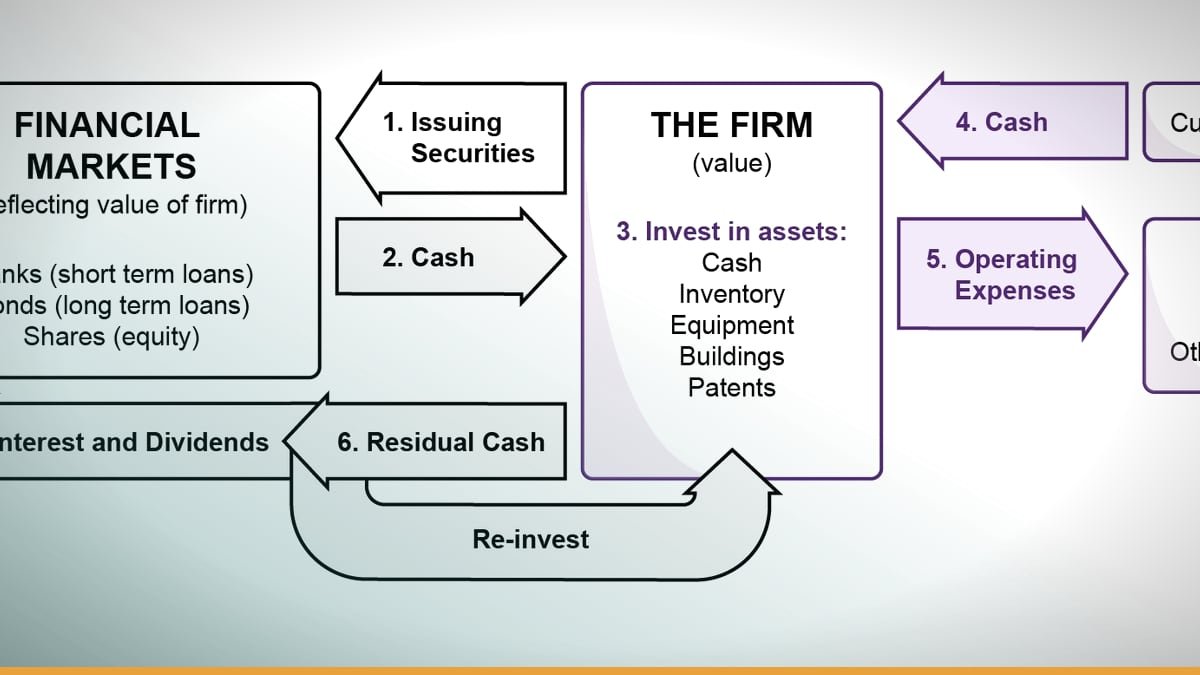
    Financial management isn’t just about counting money. It’s the deliberate, structured discipline of deciding where every dollar should go—whether that’s a $500 million corporate acquisition or a freelancer’s decision to pay off student loans instead of maxing out a Roth IRA. As one perspective puts it, finance is about getting funds, while financial management is about using them wisely for growth and success. That distinction matters. Financial management makes sure that capital is used effectively for growth and success.

    At its core, financial management operates through four interlocking functions: planning (setting targets like liquidity ratios or profit margins), organizing (structuring budgets and capital allocations), directing (guiding investment decisions and cost controls), and controlling (monitoring performance via variance analysis and compliance checks). These functions apply whether you’re a CFO evaluating a billion-dollar deal or an individual deciding between saving for a house or paying down credit card debt. The scale changes. The principles don’t.


    The Four Pillars: The Questions That Shape Every Financial Decision

    Financial management stands on four foundational pillars, each answering a critical question about how money moves through an organization or personal portfolio.

    1. Resource Allocation: Where Should Money Go?

    Resource allocation is the art of distributing limited funds across competing priorities. For a corporation, this might mean choosing between expanding into a new market or upgrading legacy IT systems. For an individual, it’s the trade-off between saving for a down payment or paying off high-interest credit card debt.

    The process hinges on cost-benefit analysis and opportunity cost—forcing decision-makers to quantify what they won’t get by choosing one path over another. A company allocating a portion of its budget to R&D might forgo short-term profits but position itself for long-term innovation. Tools like zero-based budgeting (justifying every dollar) or activity-based costing (linking expenses to specific outputs) help ensure allocations align with strategic goals.

    2. Investment Decisions: What Should We Fund?

    Investment decisions determine how capital generates future returns. Corporations evaluate projects using metrics like Net Present Value (NPV)—discounting future cash flows to their present value—or Internal Rate of Return (IRR), the break-even rate where an investment’s returns equal its cost. A project with a favorable IRR might get approved if it exceeds the company’s cost of capital, but rejected if it falls short.

    On the personal side, investment decisions revolve around asset allocation—the mix of stocks, bonds, real estate, and other vehicles in a portfolio. A younger person saving for retirement might tolerate a higher stock allocation for growth, while someone nearing retirement might shift to more conservative investments to reduce risk. Both scenarios rely on the same principle: maximizing return for a given level of risk.

    3. Financing Decisions: How Should We Fund Operations?

    Financing decisions revolve around a company’s capital structure—the mix of debt and equity used to fund operations and growth. Debt (loans, bonds) offers tax advantages—interest payments are tax-deductible—and avoids diluting ownership, but it comes with obligatory repayments that can strain cash flow. Equity (stock, retained earnings) doesn’t require repayment but dilutes control and may disappoint shareholders if returns fall short.

    Some financial theories suggest that, under certain conditions, capital structure doesn’t affect firm value. In reality, taxes, bankruptcy costs, and asymmetric information make the choice critical. Some companies might rely on equity to avoid debt payments, while others might issue debt to take advantage of favorable interest rates. The optimal structure balances cost of capital, financial flexibility, and risk tolerance.

    4. Risk Management: How Do We Protect Against Uncertainty?

    Risk management identifies, assesses, and mitigates financial threats—whether market volatility, liquidity crises, or operational failures. Corporations use hedging (e.g., futures contracts to lock in commodity prices) and diversification (spreading investments across industries) to reduce exposure. Individuals might rely on emergency funds (3–6 months of expenses) or insurance (health, disability, life) to protect against unexpected shocks.

    Historical financial crises have demonstrated the consequences of poor risk management. Some financial institutions became overleveraged, assuming certain asset prices would remain stable. When market conditions deteriorated, liquidity dried up, and some institutions collapsed. Today, Value at Risk (VaR) models and stress testing help quantify potential losses under adverse scenarios, but no tool can eliminate risk entirely—only manage it.


    Corporate vs. Personal Financial Management: Same Rules, Different Stakes

    The core principles of financial management apply universally, but the goals and tools differ between corporate and personal contexts.

    Corporate Financial Management

    Primary Goal: Maximize shareholder (or stakeholder) value. Key Tools:

    • Financial statements: Balance sheets (assets = liabilities + equity), income statements (revenue – expenses = profit), and cash flow statements (operating, investing, financing activities).
    • KPIs: EBITDA, ROIC (return on invested capital), and current ratio (liquidity).
    • Capital budgeting: Evaluating long-term investments (e.g., building a new factory) using NPV, IRR, or payback period.

    Example: A CFO might decide to issue bonds to fund expansion projects. The decision hinges on weighing the cost of debt (interest payments) against the potential ROI from increased production capacity.

    Personal Financial Management

    Primary Goal: Achieve individual milestones (retirement, homeownership, education). Key Tools:

    • Budgets: Tracking income and expenses (e.g., the 50/30/20 rule: 50% needs, 30% wants, 20% savings).
    • Investment accounts: 401(k)s, IRAs, brokerage accounts, and 529 plans (education savings).
    • Debt management: Strategies like the avalanche method (paying off high-interest debt first) or snowball method (paying off small balances first for psychological wins).

    Example: A financial planner might advise a client to maximize retirement contributions to reduce taxable income, then allocate remaining savings to other investment accounts for flexibility.

    Overlap and Divergence

    Both domains rely on cash flow management, risk assessment, and goal alignment, but the scale and consequences differ. A corporation’s poor investment decision might wipe out billions in market value; an individual’s might delay retirement by a decade. Yet the frameworks—like the time value of money (a dollar today is worth more than a dollar tomorrow)—remain identical.


    The Capital Structure Decision: Debt vs. Equity, and Everything in Between

    One of the most consequential decisions in financial management is determining a company’s capital structure—the mix of debt and equity used to finance operations. This choice affects everything from profitability to bankruptcy risk.

    Key Considerations

    1. Cost of Capital:
    • Debt is cheaper than equity because interest payments are tax-deductible, reducing a company’s taxable income. A 6% interest rate on debt might effectively cost only 4% after tax savings (assuming a 33% tax rate).
    • Equity is more expensive because investors demand higher returns to compensate for risk. The Capital Asset Pricing Model (CAPM) calculates the cost of equity as:

    “ Cost of Equity = Risk-Free Rate + Beta × (Market Return – Risk-Free Rate) “ A company with a beta of 1.5 (50% more volatile than the market) might have a cost of equity of 12%, far higher than its cost of debt.

    1. Financial Leverage:
    • Leverage amplifies returns—but also losses. A company with balanced financing between debt and equity has a debt-to-equity ratio of 1. If assets generate returns above the cost of debt, equity holders can earn amplified returns. But if assets underperform, equity holders can experience amplified losses.
    1. Flexibility vs. Control:
    • Debt avoids dilution but comes with covenants (e.g., maintaining a minimum current ratio) that can restrict operations.
    • Equity doesn’t require repayment but dilutes ownership. Founders of a startup might see their ownership stake diluted after multiple funding rounds.

    Optimal Capital Structure

    There’s no one-size-fits-all answer, but industries tend to cluster around norms:

    • Capital-intensive industries (utilities, airlines) use more debt to fund infrastructure.

    Some companies rely on equity to avoid debt payments during growth phases. Mature firms often use a mix of financing options, balancing tax advantages with financial flexibility.

    The pecking order theory suggests companies prefer internal financing (retained earnings) first, then debt, and equity as a last resort. This hierarchy reflects the information asymmetry between managers and investors—issuing equity can signal that a company’s stock is overvalued.


    Tools and Techniques: How Financial Management Gets Done

    Financial management isn’t theoretical. It’s executed through concrete tools and techniques that turn strategy into action.

    Financial Planning

    Financial planning involves forecasting revenue, expenses, and cash flow to guide decision-making. Corporations use rolling budgets (updated monthly or quarterly) and scenario analysis (best-case, worst-case, most-likely outcomes) to prepare for uncertainty. A company might model sales under various scenarios, adjusting operations accordingly.

    Key Tools:

    • Pro forma statements: Projected financial statements based on assumptions about future performance.
    • Cash flow forecasting: Predicting inflows (revenue, loans) and outflows (expenses, debt repayments) to avoid liquidity crises.

    Performance Monitoring

    Once plans are in place, performance must be tracked to ensure alignment with goals. Variance analysis compares actual results to budgets, identifying deviations (e.g., higher-than-expected marketing costs). Dashboards (Power BI, Tableau) visualize KPIs in real time, allowing managers to spot trends or anomalies quickly.

    Key Metrics:

    • Working capital: Current assets – current liabilities (measures short-term liquidity).
    • Profit margins: Gross margin (revenue – COGS), operating margin (EBIT/revenue), net margin (net income/revenue).
    • Return on assets (ROA): Net income / total assets (measures efficiency in generating profits from assets).

    Compliance and Reporting

    Financial management ensures adherence to regulations (GAAP, IFRS) and transparency for stakeholders. Public companies file 10-K reports (annual) and 10-Q reports (quarterly) with the SEC, detailing financial performance and risks. Private companies might produce management accounts for internal use, focusing on metrics like EBITDA.

    Financial management software can automate compliance reporting, reducing errors and saving time. Features like automated reconciliations and audit trails ensure accuracy and accountability.

    Technology’s Role

    Technology has transformed financial management from a manual, spreadsheet-driven process to a real-time, data-driven discipline. Enterprise Resource Planning (ERP) systems (SAP, Oracle) integrate financial data with operations, supply chain, and HR, providing a holistic view of the business. AI and machine learning enhance forecasting, fraud detection, and investment analysis.

    AI-driven predictive analytics can forecast business trends, allowing companies to make proactive decisions. Robotic Process Automation (RPA) handles repetitive tasks like invoice processing, freeing finance teams for strategic work.


    The Human Element: Skills and Careers in Financial Management

    Financial management isn’t just about numbers. It’s about people. The field demands a mix of technical expertise, strategic thinking, and leadership to guide organizations or individuals toward financial success.

    Education and Certifications

    • Minimum: A bachelor’s degree in finance, economics, accounting, or business. Coursework covers financial accounting, corporate finance, investments, and statistics.
    • Advanced: An MBA or specialized certifications like:
    • CFA (Chartered Financial Analyst): Focuses on investment management.
    • CPA (Certified Public Accountant): Emphasizes accounting and auditing.
    • FP&A (Financial Planning & Analysis) Certification: Targets corporate financial planning.

    Example: A financial analyst might hold professional certifications, while other finance professionals might have different credentials.

    Key Skills

    1. Technical Skills:
    • Financial modeling: Building Excel models to project financial performance.
    • Data analysis: Using SQL, Python, or R to extract insights from large datasets.
    • Regulatory knowledge: Understanding GAAP, IFRS, and industry-specific rules (e.g., Basel III for banks).
    1. Soft Skills:
    • Leadership: Managing teams, influencing stakeholders, and driving change.
    • Communication: Translating complex financial data into actionable insights for non-experts.
    • Strategic thinking: Aligning financial decisions with long-term business goals.

    Career Paths

    Financial management careers span corporate, personal, and public sectors:

    | Role | Responsibilities | Typical Salary (U.S.) | |————————-|————————————————————————————-|—————————| | $60,000–$90,000 | | $90,000–$150,000 | | $120,000–$200,000 | | $200,000–$500,000+ | | $60,000–$150,000 | | $100,000–$300,000 |

    Upper-level roles typically require significant experience in finance or management. Entry-level positions (financial analyst) often start with internships or rotational programs.


    Why Financial Management Matters: Outcomes and Impact

    Financial management isn’t an abstract exercise. It’s the backbone of stability, growth, and value creation for businesses and individuals alike.

    For Businesses

    1. Stability: Ensures liquidity to meet payroll, supplier payments, and debt obligations. A company with poor cash flow management might face operational challenges.
    2. Profitability: Optimizes revenue streams and cost structures. Business strategies rely on financial management to allocate resources efficiently.
    3. Growth: Funds innovation, expansions, and acquisitions. Company growth often requires disciplined capital allocation across different business areas.
    4. Stakeholder Value: Aligns decisions with shareholder interests. Shareholder theory argues that a company’s sole responsibility is to maximize profits, while stakeholder theory broadens the focus to employees, customers, and communities.

    Example: During economic challenges, companies with strong financial management tend to fare better than those with weak financial positions.

    For Individuals

    1. Security: Builds emergency funds (3–6 months of expenses) and retirement savings. Research has shown that many individuals struggle with emergency expenses, highlighting the importance of financial management.
    2. Opportunity: Enables investments (stocks, real estate, education) and debt reduction. Compound interest turns small, consistent savings into significant wealth over time. Consistent investing over time can grow savings significantly through compound returns.
    3. Freedom: Reduces financial stress by providing clarity and control. Behavioral finance shows that people with financial plans are happier and less anxious about money.

    Some financial approaches demonstrate how aggressive savings and disciplined investing can achieve financial independence.

    Societal Impact

    Efficient financial management drives economic growth by directing capital to its most productive uses. Venture capital funds startups (e.g., Uber, Airbnb), while bond markets finance infrastructure (bridges, schools). Poor financial management can contribute to economic downturns.


    Common Misconceptions and Pitfalls

    Financial management is often misunderstood, leading to costly mistakes.

    Reality: Accounting records past transactions; financial management shapes the future. Accounting asks, "What happened?" Accounting focuses on recording past transactions, while financial management focuses on planning for the future. An accountant might report changes in revenue performance. A financial manager would analyze performance and recommend appropriate actions.

    Reality: Small businesses and individuals rely on financial management daily. A freelancer tracking cash flow, a startup securing seed funding, or a family budgeting for college—all engage in financial management. Cash flow management is especially critical for small businesses, as many failures relate to cash flow issues.

    Pitfall 1: Overleveraging

    Excessive debt can lead to insolvency. Some financial crises have been fueled by excessive leverage in the banking system. When asset prices fell significantly, some institutions couldn’t cover losses, triggering broader financial problems.

    Lesson: The debt-to-equity ratio should align with industry norms and risk tolerance. A common guideline suggests that total debt should be kept within reasonable limits relative to equity.

    Pitfall 2: Short-Termism

    Prioritizing quarterly profits over long-term sustainability destroys value. Some companies have failed to adapt to technological changes despite having early advantages. Some companies have failed to adapt to market disruptions, allowing competitors to dominate. Both collapsed.

    Lesson: Discounted Cash Flow (DCF) models force companies to consider long-term value, not just immediate gains.

    Pitfall 3: Ignoring Risk

    The 2008 crisis and COVID-19 pandemic proved that "black swan" events happen. Companies without contingency plans or diversified revenue streams fail. Example: Companies with strong financial positions tend to survive economic challenges better than those with high debt levels.

    Lesson: Stress testing and scenario planning prepare for worst-case scenarios.


    The Future of Financial Management: Trends to Watch

    Financial management is evolving rapidly, driven by technology, globalization, and shifting priorities.

    AI and Automation

    AI is transforming financial management from descriptive (what happened) to prescriptive (what should happen). Key applications:

    • Fraud detection: Machine learning models identify anomalous transactions in real time.
    • Predictive analytics: Forecasting cash flow, demand, and market trends with greater accuracy.
    • Algorithmic trading: AI-driven investment approaches can generate returns by analyzing large datasets.

    Some financial institutions use AI to review documents, reducing errors and saving time.

    Sustainability Integration

    ESG (Environmental, Social, Governance) metrics are reshaping investment decisions. Companies with strong ESG scores attract capital, while laggards face higher costs. Example: Some asset managers now evaluate companies on ESG performance. Green bonds fund renewable energy and other sustainable projects.

    Challenge: Measuring ESG impact is subjective. Greenwashing—exaggerating sustainability efforts—is a growing concern.

    Decentralized Finance (DeFi)

    Blockchain and smart contracts are enabling peer-to-peer lending, trading, and insurance without intermediaries. Example: Decentralized exchanges allow users to trade cryptocurrencies without central authorities. DeFi lending platforms allow users to earn interest on deposits.

    Risks: Regulatory uncertainty, security vulnerabilities (e.g., $600 million Poly Network hack), and volatility.

    Personalization

    Robo-advisors use algorithms to create personalized investment portfolios based on risk tolerance and goals. Example:

    • An investor with high risk tolerance might get a higher stock allocation.
    • An investor nearing retirement might get a more conservative allocation.

    Challenge: Robo-advisors lack the human touch—critical for complex financial planning (e.g., tax strategies, estate planning).


    The Open Question: Can Financial Management Keep Up?

    Financial management has always been about balancing risk and return, but the stakes are higher than ever. Climate change, geopolitical instability, and technological disruption demand new tools and mindsets. Can traditional frameworks adapt to a world where intangible assets comprise significant market value? Can regulators keep pace with DeFi’s borderless, algorithm-driven transactions?

    The most pressing question isn’t whether financial management will evolve. It’s how fast it can evolve to meet the challenges of the 21st century. The answer will determine who thrives and who gets left behind.