Tag: business strategy

  • **What Is Financial Management?: A Strategic Framework for Resource Allocation, Growth, and Value**

    **What Is Financial Management?: A Strategic Framework for Resource Allocation, Growth, and Value**

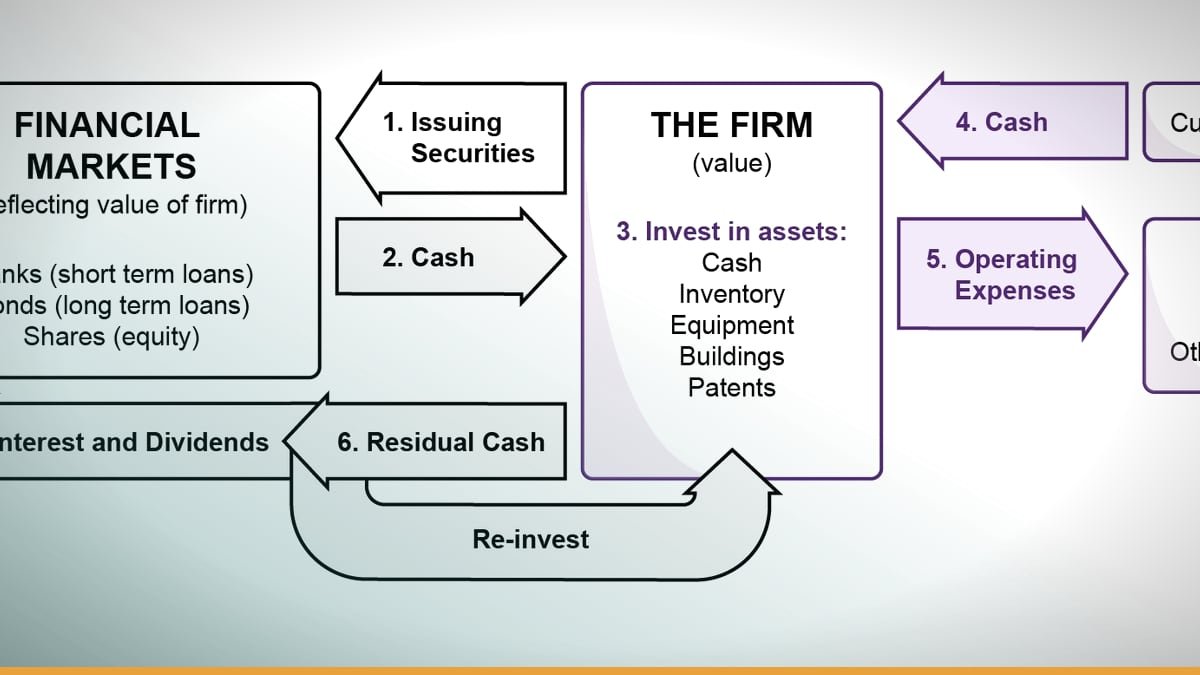
    Header image source: What is Financial Management? – Introduction to Financial Management: A Contemporary Approach via Open Textbooks @ UQ via Google — cropped to 16:9 and colour-adjusted.

    Key takeaways

    • Financial management coordinates planning, organizing, directing and controlling money for growth
    • Four pillars guide decisions: resource allocation, investments, financing, and risk
    • Same principles apply to corporate and personal finance with different stakes

    Financial management isn’t just about counting money. It’s the deliberate, structured discipline of deciding where every dollar should go—whether that’s a $500 million corporate acquisition or a freelancer’s decision to pay off student loans instead of maxing out a Roth IRA. As one perspective puts it, finance is about getting funds, while financial management is about using them wisely for growth and success. That distinction matters. Financial management makes sure that capital is used effectively for growth and success.

    At its core, financial management operates through four interlocking functions: planning (setting targets like liquidity ratios or profit margins), organizing (structuring budgets and capital allocations), directing (guiding investment decisions and cost controls), and controlling (monitoring performance via variance analysis and compliance checks). These functions apply whether you’re a CFO evaluating a billion-dollar deal or an individual deciding between saving for a house or paying down credit card debt. The scale changes. The principles don’t.


    The Four Pillars: The Questions That Shape Every Financial Decision

    Financial management stands on four foundational pillars, each answering a critical question about how money moves through an organization or personal portfolio.

    1. Resource Allocation: Where Should Money Go?

    Resource allocation is the art of distributing limited funds across competing priorities. For a corporation, this might mean choosing between expanding into a new market or upgrading legacy IT systems. For an individual, it’s the trade-off between saving for a down payment or paying off high-interest credit card debt.

    The process hinges on cost-benefit analysis and opportunity cost—forcing decision-makers to quantify what they won’t get by choosing one path over another. A company allocating a portion of its budget to R&D might forgo short-term profits but position itself for long-term innovation. Tools like zero-based budgeting (justifying every dollar) or activity-based costing (linking expenses to specific outputs) help ensure allocations align with strategic goals.

    2. Investment Decisions: What Should We Fund?

    Investment decisions determine how capital generates future returns. Corporations evaluate projects using metrics like Net Present Value (NPV)—discounting future cash flows to their present value—or Internal Rate of Return (IRR), the break-even rate where an investment’s returns equal its cost. A project with a favorable IRR might get approved if it exceeds the company’s cost of capital, but rejected if it falls short.

    On the personal side, investment decisions revolve around asset allocation—the mix of stocks, bonds, real estate, and other vehicles in a portfolio. A younger person saving for retirement might tolerate a higher stock allocation for growth, while someone nearing retirement might shift to more conservative investments to reduce risk. Both scenarios rely on the same principle: maximizing return for a given level of risk.

    3. Financing Decisions: How Should We Fund Operations?

    Financing decisions revolve around a company’s capital structure—the mix of debt and equity used to fund operations and growth. Debt (loans, bonds) offers tax advantages—interest payments are tax-deductible—and avoids diluting ownership, but it comes with obligatory repayments that can strain cash flow. Equity (stock, retained earnings) doesn’t require repayment but dilutes control and may disappoint shareholders if returns fall short.

    Some financial theories suggest that, under certain conditions, capital structure doesn’t affect firm value. In reality, taxes, bankruptcy costs, and asymmetric information make the choice critical. Some companies might rely on equity to avoid debt payments, while others might issue debt to take advantage of favorable interest rates. The optimal structure balances cost of capital, financial flexibility, and risk tolerance.

    4. Risk Management: How Do We Protect Against Uncertainty?

    Risk management identifies, assesses, and mitigates financial threats—whether market volatility, liquidity crises, or operational failures. Corporations use hedging (e.g., futures contracts to lock in commodity prices) and diversification (spreading investments across industries) to reduce exposure. Individuals might rely on emergency funds (3–6 months of expenses) or insurance (health, disability, life) to protect against unexpected shocks.

    Historical financial crises have demonstrated the consequences of poor risk management. Some financial institutions became overleveraged, assuming certain asset prices would remain stable. When market conditions deteriorated, liquidity dried up, and some institutions collapsed. Today, Value at Risk (VaR) models and stress testing help quantify potential losses under adverse scenarios, but no tool can eliminate risk entirely—only manage it.


    Corporate vs. Personal Financial Management: Same Rules, Different Stakes

    The core principles of financial management apply universally, but the goals and tools differ between corporate and personal contexts.

    Corporate Financial Management

    Primary Goal: Maximize shareholder (or stakeholder) value. Key Tools:

    • Financial statements: Balance sheets (assets = liabilities + equity), income statements (revenue – expenses = profit), and cash flow statements (operating, investing, financing activities).
    • KPIs: EBITDA, ROIC (return on invested capital), and current ratio (liquidity).
    • Capital budgeting: Evaluating long-term investments (e.g., building a new factory) using NPV, IRR, or payback period.

    Example: A CFO might decide to issue bonds to fund expansion projects. The decision hinges on weighing the cost of debt (interest payments) against the potential ROI from increased production capacity.

    Personal Financial Management

    Primary Goal: Achieve individual milestones (retirement, homeownership, education). Key Tools:

    • Budgets: Tracking income and expenses (e.g., the 50/30/20 rule: 50% needs, 30% wants, 20% savings).
    • Investment accounts: 401(k)s, IRAs, brokerage accounts, and 529 plans (education savings).
    • Debt management: Strategies like the avalanche method (paying off high-interest debt first) or snowball method (paying off small balances first for psychological wins).

    Example: A financial planner might advise a client to maximize retirement contributions to reduce taxable income, then allocate remaining savings to other investment accounts for flexibility.

    Overlap and Divergence

    Both domains rely on cash flow management, risk assessment, and goal alignment, but the scale and consequences differ. A corporation’s poor investment decision might wipe out billions in market value; an individual’s might delay retirement by a decade. Yet the frameworks—like the time value of money (a dollar today is worth more than a dollar tomorrow)—remain identical.


    The Capital Structure Decision: Debt vs. Equity, and Everything in Between

    One of the most consequential decisions in financial management is determining a company’s capital structure—the mix of debt and equity used to finance operations. This choice affects everything from profitability to bankruptcy risk.

    Key Considerations

    1. Cost of Capital:
    • Debt is cheaper than equity because interest payments are tax-deductible, reducing a company’s taxable income. A 6% interest rate on debt might effectively cost only 4% after tax savings (assuming a 33% tax rate).
    • Equity is more expensive because investors demand higher returns to compensate for risk. The Capital Asset Pricing Model (CAPM) calculates the cost of equity as:

    “ Cost of Equity = Risk-Free Rate + Beta × (Market Return – Risk-Free Rate) “ A company with a beta of 1.5 (50% more volatile than the market) might have a cost of equity of 12%, far higher than its cost of debt.

    1. Financial Leverage:
    • Leverage amplifies returns—but also losses. A company with balanced financing between debt and equity has a debt-to-equity ratio of 1. If assets generate returns above the cost of debt, equity holders can earn amplified returns. But if assets underperform, equity holders can experience amplified losses.
    1. Flexibility vs. Control:
    • Debt avoids dilution but comes with covenants (e.g., maintaining a minimum current ratio) that can restrict operations.
    • Equity doesn’t require repayment but dilutes ownership. Founders of a startup might see their ownership stake diluted after multiple funding rounds.

    Optimal Capital Structure

    There’s no one-size-fits-all answer, but industries tend to cluster around norms:

    • Capital-intensive industries (utilities, airlines) use more debt to fund infrastructure.

    Some companies rely on equity to avoid debt payments during growth phases. Mature firms often use a mix of financing options, balancing tax advantages with financial flexibility.

    The pecking order theory suggests companies prefer internal financing (retained earnings) first, then debt, and equity as a last resort. This hierarchy reflects the information asymmetry between managers and investors—issuing equity can signal that a company’s stock is overvalued.


    Tools and Techniques: How Financial Management Gets Done

    Financial management isn’t theoretical. It’s executed through concrete tools and techniques that turn strategy into action.

    Financial Planning

    Financial planning involves forecasting revenue, expenses, and cash flow to guide decision-making. Corporations use rolling budgets (updated monthly or quarterly) and scenario analysis (best-case, worst-case, most-likely outcomes) to prepare for uncertainty. A company might model sales under various scenarios, adjusting operations accordingly.

    Key Tools:

    • Pro forma statements: Projected financial statements based on assumptions about future performance.
    • Cash flow forecasting: Predicting inflows (revenue, loans) and outflows (expenses, debt repayments) to avoid liquidity crises.

    Performance Monitoring

    Once plans are in place, performance must be tracked to ensure alignment with goals. Variance analysis compares actual results to budgets, identifying deviations (e.g., higher-than-expected marketing costs). Dashboards (Power BI, Tableau) visualize KPIs in real time, allowing managers to spot trends or anomalies quickly.

    Key Metrics:

    • Working capital: Current assets – current liabilities (measures short-term liquidity).
    • Profit margins: Gross margin (revenue – COGS), operating margin (EBIT/revenue), net margin (net income/revenue).
    • Return on assets (ROA): Net income / total assets (measures efficiency in generating profits from assets).

    Compliance and Reporting

    Financial management ensures adherence to regulations (GAAP, IFRS) and transparency for stakeholders. Public companies file 10-K reports (annual) and 10-Q reports (quarterly) with the SEC, detailing financial performance and risks. Private companies might produce management accounts for internal use, focusing on metrics like EBITDA.

    Financial management software can automate compliance reporting, reducing errors and saving time. Features like automated reconciliations and audit trails ensure accuracy and accountability.

    Technology’s Role

    Technology has transformed financial management from a manual, spreadsheet-driven process to a real-time, data-driven discipline. Enterprise Resource Planning (ERP) systems (SAP, Oracle) integrate financial data with operations, supply chain, and HR, providing a holistic view of the business. AI and machine learning enhance forecasting, fraud detection, and investment analysis.

    AI-driven predictive analytics can forecast business trends, allowing companies to make proactive decisions. Robotic Process Automation (RPA) handles repetitive tasks like invoice processing, freeing finance teams for strategic work.


    The Human Element: Skills and Careers in Financial Management

    Financial management isn’t just about numbers. It’s about people. The field demands a mix of technical expertise, strategic thinking, and leadership to guide organizations or individuals toward financial success.

    Education and Certifications

    • Minimum: A bachelor’s degree in finance, economics, accounting, or business. Coursework covers financial accounting, corporate finance, investments, and statistics.
    • Advanced: An MBA or specialized certifications like:
    • CFA (Chartered Financial Analyst): Focuses on investment management.
    • CPA (Certified Public Accountant): Emphasizes accounting and auditing.
    • FP&A (Financial Planning & Analysis) Certification: Targets corporate financial planning.

    Example: A financial analyst might hold professional certifications, while other finance professionals might have different credentials.

    Key Skills

    1. Technical Skills:
    • Financial modeling: Building Excel models to project financial performance.
    • Data analysis: Using SQL, Python, or R to extract insights from large datasets.
    • Regulatory knowledge: Understanding GAAP, IFRS, and industry-specific rules (e.g., Basel III for banks).
    1. Soft Skills:
    • Leadership: Managing teams, influencing stakeholders, and driving change.
    • Communication: Translating complex financial data into actionable insights for non-experts.
    • Strategic thinking: Aligning financial decisions with long-term business goals.

    Career Paths

    Financial management careers span corporate, personal, and public sectors:

    | Role | Responsibilities | Typical Salary (U.S.) | |————————-|————————————————————————————-|—————————| | $60,000–$90,000 | | $90,000–$150,000 | | $120,000–$200,000 | | $200,000–$500,000+ | | $60,000–$150,000 | | $100,000–$300,000 |

    Upper-level roles typically require significant experience in finance or management. Entry-level positions (financial analyst) often start with internships or rotational programs.


    Why Financial Management Matters: Outcomes and Impact

    Financial management isn’t an abstract exercise. It’s the backbone of stability, growth, and value creation for businesses and individuals alike.

    For Businesses

    1. Stability: Ensures liquidity to meet payroll, supplier payments, and debt obligations. A company with poor cash flow management might face operational challenges.
    2. Profitability: Optimizes revenue streams and cost structures. Business strategies rely on financial management to allocate resources efficiently.
    3. Growth: Funds innovation, expansions, and acquisitions. Company growth often requires disciplined capital allocation across different business areas.
    4. Stakeholder Value: Aligns decisions with shareholder interests. Shareholder theory argues that a company’s sole responsibility is to maximize profits, while stakeholder theory broadens the focus to employees, customers, and communities.

    Example: During economic challenges, companies with strong financial management tend to fare better than those with weak financial positions.

    For Individuals

    1. Security: Builds emergency funds (3–6 months of expenses) and retirement savings. Research has shown that many individuals struggle with emergency expenses, highlighting the importance of financial management.
    2. Opportunity: Enables investments (stocks, real estate, education) and debt reduction. Compound interest turns small, consistent savings into significant wealth over time. Consistent investing over time can grow savings significantly through compound returns.
    3. Freedom: Reduces financial stress by providing clarity and control. Behavioral finance shows that people with financial plans are happier and less anxious about money.

    Some financial approaches demonstrate how aggressive savings and disciplined investing can achieve financial independence.

    Societal Impact

    Efficient financial management drives economic growth by directing capital to its most productive uses. Venture capital funds startups (e.g., Uber, Airbnb), while bond markets finance infrastructure (bridges, schools). Poor financial management can contribute to economic downturns.


    Common Misconceptions and Pitfalls

    Financial management is often misunderstood, leading to costly mistakes.

    Reality: Accounting records past transactions; financial management shapes the future. Accounting asks, "What happened?" Accounting focuses on recording past transactions, while financial management focuses on planning for the future. An accountant might report changes in revenue performance. A financial manager would analyze performance and recommend appropriate actions.

    Reality: Small businesses and individuals rely on financial management daily. A freelancer tracking cash flow, a startup securing seed funding, or a family budgeting for college—all engage in financial management. Cash flow management is especially critical for small businesses, as many failures relate to cash flow issues.

    Pitfall 1: Overleveraging

    Excessive debt can lead to insolvency. Some financial crises have been fueled by excessive leverage in the banking system. When asset prices fell significantly, some institutions couldn’t cover losses, triggering broader financial problems.

    Lesson: The debt-to-equity ratio should align with industry norms and risk tolerance. A common guideline suggests that total debt should be kept within reasonable limits relative to equity.

    Pitfall 2: Short-Termism

    Prioritizing quarterly profits over long-term sustainability destroys value. Some companies have failed to adapt to technological changes despite having early advantages. Some companies have failed to adapt to market disruptions, allowing competitors to dominate. Both collapsed.

    Lesson: Discounted Cash Flow (DCF) models force companies to consider long-term value, not just immediate gains.

    Pitfall 3: Ignoring Risk

    The 2008 crisis and COVID-19 pandemic proved that "black swan" events happen. Companies without contingency plans or diversified revenue streams fail. Example: Companies with strong financial positions tend to survive economic challenges better than those with high debt levels.

    Lesson: Stress testing and scenario planning prepare for worst-case scenarios.


    The Future of Financial Management: Trends to Watch

    Financial management is evolving rapidly, driven by technology, globalization, and shifting priorities.

    AI and Automation

    AI is transforming financial management from descriptive (what happened) to prescriptive (what should happen). Key applications:

    • Fraud detection: Machine learning models identify anomalous transactions in real time.
    • Predictive analytics: Forecasting cash flow, demand, and market trends with greater accuracy.
    • Algorithmic trading: AI-driven investment approaches can generate returns by analyzing large datasets.

    Some financial institutions use AI to review documents, reducing errors and saving time.

    Sustainability Integration

    ESG (Environmental, Social, Governance) metrics are reshaping investment decisions. Companies with strong ESG scores attract capital, while laggards face higher costs. Example: Some asset managers now evaluate companies on ESG performance. Green bonds fund renewable energy and other sustainable projects.

    Challenge: Measuring ESG impact is subjective. Greenwashing—exaggerating sustainability efforts—is a growing concern.

    Decentralized Finance (DeFi)

    Blockchain and smart contracts are enabling peer-to-peer lending, trading, and insurance without intermediaries. Example: Decentralized exchanges allow users to trade cryptocurrencies without central authorities. DeFi lending platforms allow users to earn interest on deposits.

    Risks: Regulatory uncertainty, security vulnerabilities (e.g., $600 million Poly Network hack), and volatility.

    Personalization

    Robo-advisors use algorithms to create personalized investment portfolios based on risk tolerance and goals. Example:

    • An investor with high risk tolerance might get a higher stock allocation.
    • An investor nearing retirement might get a more conservative allocation.

    Challenge: Robo-advisors lack the human touch—critical for complex financial planning (e.g., tax strategies, estate planning).


    The Open Question: Can Financial Management Keep Up?

    Financial management has always been about balancing risk and return, but the stakes are higher than ever. Climate change, geopolitical instability, and technological disruption demand new tools and mindsets. Can traditional frameworks adapt to a world where intangible assets comprise significant market value? Can regulators keep pace with DeFi’s borderless, algorithm-driven transactions?

    The most pressing question isn’t whether financial management will evolve. It’s how fast it can evolve to meet the challenges of the 21st century. The answer will determine who thrives and who gets left behind.


  • **What Is Business Finance? A Data-Driven Breakdown of Its Core Purpose and Mechanics**

    **What Is Business Finance? A Data-Driven Breakdown of Its Core Purpose and Mechanics**

    Header image source: What are the Five Goals for Business Finance? | FutureBusiness via Future Business via Google — cropped to 16:9 and colour-adjusted.

    Key takeaways

    • Business finance covers capital, allocation, and performance measurement
    • Debt vs equity financing involves trade-offs in control and risk
    • Financial statements and KPIs are essential for strategic decisions

    As one definition puts it: business finance is "the way a company gets money, spends it, and tracks whether those choices are working. " That last part—tracking—is what separates deliberate strategy from blind gambling. Without it, you’re not running a business. You’re hoping.

    This isn’t some abstract corner of corporate life. It’s one of three core branches of finance, alongside personal and public finance, and it operates by its own brutal logic. One perspective defines business finance as managers applying financial principles to maximise firm value in a risky environment. Not theoretical risk. Real risk—payroll that won’t clear, suppliers demanding payment, expansion that could sink the company.


    The Three Pillars Aren’t Theory. They’re Survival.

    Business finance stands on three functions, and every major decision flows through them. These aren’t academic boxes to tick. They’re the difference between growth and collapse.

    1. Raising capital Money doesn’t appear. It’s sourced—through debt, equity, or internal cash flow. Debt means loans or bonds, repaid with interest. Equity means selling shares, trading ownership for capital. Internal cash flow comes from revenue, but it’s unpredictable. One definition describes this as "the funds and credit that are used in a business to finance its operations. " Every dollar raised has a cost—interest, dividends, or loss of control. There’s no free money.

    2. Strategic allocation Capital raised has to be deployed. That’s where decisions get real—hiring, R&D, equipment, expansion. One framework describes this as "deciding how to use" the money, but that undersells it. This isn’t spending. It’s investing. A new machine might cut production costs by 15%, but only if the upfront cost doesn’t strangle cash flow. This can be described as the "analytical framework" of business finance. Without it, you’re guessing.

    3. Performance measurement Did the investments work? Are the funding choices sustainable? Financial statements—balance sheets, income statements, cash flow statements—are the scorecards. KPIs like ROI, working capital, and burn rate turn outcomes into numbers. One perspective bluntly states that business finance is about tracking "whether those choices are working. " If they’re not, the framework demands changes. No excuses.


    The Funding Landscape Isn’t Binary—It’s a Spectrum of Trade-Offs

    Business finance isn’t monolithic. The funding a company uses varies by duration, structure, and risk. Business finance can be grouped by "where funds come from, how they’re structured, and how long they last. " That taxonomy breaks into four main types, each with its own trade-offs.

    Short-term vs. long-term Short-term finance covers immediate needs—payroll, inventory, cash flow gaps. Think lines of credit, trade credit, invoice financing. Long-term finance funds growth—equipment, real estate, expansion. Bonds, term loans, equity. Both are listed in standard classifications, but the distinction is critical. Short-term finance is about survival. Long-term finance is about scaling. Mix them up, and you’re in trouble.

    Debt vs. equity Debt means borrowing—loans, bonds, credit lines—repaid with interest. Equity means selling ownership—venture capital, public stock offerings. Debt preserves control but adds repayment pressure. Equity avoids debt but dilutes ownership. Standard breakdowns highlight the trade-offs. Neither is inherently better. The right choice depends on the company’s stage, risk tolerance, and growth trajectory.

    Hybrids and alternatives Beyond debt and equity, newer models are emerging. Revenue-based financing ties repayments to revenue, not fixed schedules. Crowdfunding turns customers into investors. This evolution is reflected in how business finance "can be grouped by where funds come from. " The landscape is expanding, but the core question remains: what’s the cost, and what’s the control?


    Business Finance Isn’t Personal Finance on a Bigger Scale

    Business finance and personal finance share principles—budgeting, saving, investing—but their stakes and strategies diverge sharply. As one perspective puts it: "While personal and business finance share basic principles, they differ greatly when it comes to scope, clarity, and strategic finance. "

    Scope and complexity Personal finance deals with individuals—salaries, mortgages, retirement. Business finance deals with organisations—payroll, suppliers, taxes, expansion. The scale is different, but so is the complexity. Businesses operate in a web of regulations, market conditions, and competitive pressures. A misstep in personal finance might mean a delayed vacation. A misstep in business finance might mean insolvency.

    Calculated risks Personal finance is risk-averse. You save for emergencies, diversify investments, avoid debt. Business finance embraces risk—strategically. Business finance "accepts calculated risks aligned with growth potential, often leveraging debt strategically. " A company might take on debt to expand, knowing the ROI will outpace the interest. That’s not reckless—it’s deliberate. But it’s a mindset that doesn’t translate to personal finance.

    Common pitfalls The biggest mistake? Blurring the lines. Owners often "struggle when applying personal finance mindsets to business decisions, or vice versa. " Using a business credit card for personal expenses, or vice versa, muddies financial tracking. Worse, it distorts decision-making. Business finance demands discipline. Personal finance allows more flexibility.


    Finance Isn’t an Abstract Discipline—It’s the Backbone of Daily Operations

    Business finance isn’t some theoretical exercise. It dictates daily decisions. As one perspective makes clear: "Understanding business finance isn’t just for accountants—it shapes nearly every decision you make, from hiring to expanding to handling a slow quarter. "

    Hiring and expansion Growth requires capital. Can the company afford to hire? Should it lease or buy equipment? Financial planning answers these questions. Cash flow forecasts dictate whether expansion is feasible. Without them, growth becomes a gamble. Business finance "supports ongoing operations," but it also enables scaling. The difference between a stagnant company and a growing one often comes down to financial planning.

    Crisis management Downturns are inevitable. Strong finance enables survival. Reserves, credit access, contingency plans keep a business afloat during slow quarters. This can be framed as "handling a slow quarter," but it’s more than that. It’s about resilience. Companies with weak finance fold during crises. Those with strong finance pivot.

    Everyday choices Even small decisions—suppliers, inventory, pricing—hinge on financial constraints. Can the company afford to switch suppliers for a 5% cost saving? Does inventory turnover justify bulk purchases? These aren’t just operational questions. They’re financial ones. As one perspective puts it succinctly: business finance "shapes nearly every decision. "


    The Tools Aren’t Optional—They’re the Difference Between Clarity and Chaos

    Business finance doesn’t run on intuition. It runs on data, tools, and metrics. The core tools are financial statements, budgeting, and KPIs—each serving a specific purpose.

    Financial statements Three documents track a company’s health:

    • Balance sheet: Assets, liabilities, and equity at a point in time.
    • Income statement: Revenue, expenses, and profit over a period.
    • Cash flow statement: Inflows and outflows, separating operations, investing, and financing.

    These represent the "management of financial resources within an organisation. " They’re not just for accountants. They’re for decision-makers. A balance sheet reveals liquidity. An income statement shows profitability. A cash flow statement exposes vulnerabilities. Ignore them, and you’re flying blind.

    Budgeting and forecasting Budgets allocate resources. Forecasts predict outcomes. Together, they guide spending and investment. Business finance involves "planning" money. That planning isn’t static. It’s dynamic, adjusting to market conditions, growth, and crises. A budget without forecasting is just a wish list.

    Metrics KPIs quantify success. Key metrics include:

    • ROI: Return on investment. Is the money working?
    • Working capital: Current assets minus current liabilities. Can the company cover short-term obligations?
    • Burn rate: How fast is cash being spent? How long until it runs out?

    These represent the "performance measurement" pillar of business finance. Without them, companies can’t track progress—or failure. They’re the difference between informed decisions and guesswork.


    Poor Financial Management Isn’t a Mistake—It’s a Death Sentence

    Business finance isn’t optional. Weak finance leads to failure. As one perspective states bluntly: "The importance of business finance cannot be overstated, as it ensures the stability and scalability of a business. "

    Failure rates Cash flow mismanagement is a leading cause of business failure. Studies show that a significant percentage of small businesses fail due to poor cash flow management. That’s not a fluke. It’s a pattern. Without strong finance, companies run out of money—even if they’re profitable on paper. Profit isn’t cash. Cash is survival.

    Growth barriers Growth requires capital. Without it, businesses stagnate. Business finance "gives it room to grow. " But growth isn’t just about having money. It’s about deploying it strategically. A company might have cash but lack the financial planning to scale. That cash becomes a liability, not an asset.

    Competitive edge Strong finance enables agility. During crises, companies with reserves and credit access pivot. Those without fold. This can be framed as "informed decisions that protect your margins. " But it’s more than margins. It’s survival. The companies that thrive aren’t the ones with the best products. They’re the ones with the best financial management.


    The Future Isn’t Coming—It’s Already Here

    Business finance isn’t static. Technology, alternative funding, and global risks are reshaping the discipline. The question isn’t whether these changes will happen. It’s whether companies will adapt.

    Tech-driven finance AI and automation are streamlining financial management. Modern financial tools use AI to categorise expenses, detect anomalies, and optimise cash flow. The shift in business finance includes tools that shape decisions. The implication is clear: manual processes are giving way to data-driven insights. Companies that cling to spreadsheets will fall behind.

    Alternative funding Traditional debt and equity are no longer the only options. Crowdfunding, revenue-based financing, and peer-to-peer lending are disrupting the landscape. These are emerging types of business finance. The appeal? Flexibility. Companies can access capital without traditional lenders or investors. But flexibility comes with complexity. The rules are changing, and not everyone will keep up.

    Evolving risk landscape Climate change, geopolitics, and supply chain disruptions are reshaping financial strategies. Business finance operates in a "risky environment. " That risk isn’t just financial. It’s operational, regulatory, and existential. Companies are adapting—building resilience, diversifying supply chains, stress-testing financial models. The ones that don’t will pay the price.


    The Open Question Isn’t Whether Finance Matters—It’s Who Will Treat It as a Priority

    Business finance isn’t just about money. It’s about survival, growth, and strategy. The data is clear: companies with strong financial management thrive. Those without fail. The tools exist. The frameworks are proven. The consequences of neglect are dire.

    The question isn’t whether business finance matters. It’s whether leaders will treat it as the priority it is—or as an afterthought. The answer will determine who survives, who scales, and who gets left behind. The clock is ticking.


  • **What Is Finance in Accounting? The Evidence-Backed Distinction**

    **What Is Finance in Accounting? The Evidence-Backed Distinction**

    Header image source: Finance vs. Accounting: What’s the Difference? | HBS Online via Harvard Business School Online via Google — cropped to 16:9 and colour-adjusted.

    Key takeaways

    • Accounting is retrospective and rules-based; finance is prospective and analytical.
    • Accounting provides the data; finance creates the strategy.
    • AI automates tasks but deepens the need for both disciplines.

    Finance in accounting isn’t redundant. It’s deliberate. Two disciplines, one framework—past precision meeting future strategy. Accounting records what happened. Finance decides what to do next. That’s the divide. And it’s why both matter.

    Casual conversation blurs them. Evidence doesn’t. Accounting is retrospective, rules-bound, exact. Finance is forward-looking, analytical, strategic. One fuels the other. Without accounting, finance starves for data. Without finance, accounting is just numbers in a ledger.


    Retrospective vs. Prospective: The Time Divide

    Accounting lives in the past. Completed transactions. Revenue earned. Expenses incurred. Assets acquired. The outputs? Financial statements—balance sheets, income statements, cash flow statements. Historical artifacts. A quarterly earnings report tells investors what happened last quarter. It doesn’t predict next quarter.

    Finance lives in the future. It starts where accounting ends. Take that $10 million revenue figure. A finance professional asks: What does this mean for next year? Reinvest? Issue debt? Return capital? Tools like discounted cash flow models, CAPM, scenario analysis—all built to project outcomes. The past is just the foundation.

    Accounting. As the evidence shows: Finance is more analytical and future-oriented, while accounting is more rules-based and retrospective. Not preference. Structure. Accounting documents. Finance strategizes.


    Rules vs. Judgment: Precision Meets Subjectivity

    Accounting follows rules. GAAP in the U.S. IFRS globally. Frameworks dictate how transactions are recorded, assets valued, statements presented. Auditors verify compliance. The goal? Consistency. Comparability.

    Finance has no rulebook. Only judgment. A 10% discount rate in a DCF model? Valid. 8%? Also valid. Depends on risk, market conditions, cost of capital. Growth rates, terminal values, capital structure—no “correct” answer. Only better or worse ones.

    The distinction is clear: There is more subjective judgment in finance and more precision in accounting. Not a flaw. A feature. Finance thrives on uncertainty. Accounting thrives on certainty. One can’t function without the other. A finance model is only as good as its accounting data. And accounting data is only useful if finance can act on it.


    The Asset Management Spectrum: Valuation vs. Optimization

    Accounting records assets at historical cost or fair value. Compliance with depreciation, amortization, impairment tests. A factory on the balance sheet at $50 million net book value—original cost minus depreciation. Job done.

    Finance asks: Is this factory worth keeping? The $50 million is just a starting point. Project future cash flows. Discount them back. Compare to book value. Consider alternatives—sell, relocate, automate. The goal isn’t valuation. It’s optimization.

    HBS Online frames it as different levels of the asset management spectrum. Accounting scores. Finance plays.


    Data as Input vs. Data as Output

    Accounting’s outputs are financial statements. Standardized. Audited. Distributed. The official record.

    Finance’s inputs are those same statements. But not as final deliverables. As raw material. A DCF model starts with revenue and expenses, adjusts for non-cash items, projects cash flows. An LBO model uses debt and equity figures to structure a deal. Stress tests assess liquidity under adverse scenarios.

    The evidence shows: Accounting focuses on properly recording what has happened, while finance deals with assets, liabilities, and equity more broadly. Sequential workflow. Accountant closes the books on December 31. Finance analyst uses them to pitch a January acquisition. Without accounting, finance builds on sand. Without finance, accounting is a ledger with no purpose.


    Career Paths and Education: Skills, Certifications, Outcomes

    Finance and accounting rank among the most popular business degrees—FAME framework (Finance, Accounting, Management, Economics). But the paths diverge.

    Accounting professionals master tax codes, audit procedures, ERP systems like SAP or Oracle. Certifications: CPA, CMA. Detail-oriented. Compliance-driven. Repetitive—reconciling accounts, preparing tax filings, ensuring GAAP adherence.

    Finance professionals focus on modeling, valuation, capital markets. Certifications: CFA, FP&A. Tools: Excel, Bloomberg, statistical software. Build DCF models. Analyze M&A deals. Manage portfolios. Analytical. Strategic. High-stakes.

    Both degrees are highly sought-after. Career paths reflect the disciplines. Accountants climb to controller or CFO through technical expertise. Finance professionals through strategic decision-making. One ensures the numbers are right. The other ensures they’re used right.


    Public and Private Sector Relevance

    Private sector: accounting ensures compliance. Public companies file quarterly and annual reports with the SEC. Private companies prepare statements for lenders, investors, buyers. The language of regulation and stakeholders.

    Finance drives growth. Raises equity. Issues debt. Pursues IPOs. Evaluates mergers. Divests underperforming units. Hedges currency risk. Without finance, companies stagnate.

    Public sector mirrors this. Governments track tax revenues, monitor expenditures, ensure budget adherence. Comptroller’s office records every dollar. But finance deploys them. Issue municipal bonds for a subway line? Shift a pension fund’s asset allocation? Finance questions. Informed by accounting.

    Both finance and accounting are highly valuable for assessing a company’s position and performance. Same for governments, nonprofits, households. Accounting tells you where you’ve been. Finance tells you where to go.


    The Convergence Point: Where Data Meets Decision

    Finance and accounting aren’t siloed. They converge. Historical data meets strategic decision-making.

    Financial reporting (accounting) informs valuation models (finance). Cost accounting (accounting) feeds capital budgeting (finance). Tax accounting (accounting) shapes financial planning (finance). The handoff is seamless.

    The evidence shows: Finance is more general and future-focused, while accounting works with existing records. Finance relies on accounting’s outputs. But accounting’s outputs are only useful if finance can act on them.

    Private equity firm evaluating an acquisition? Accountants ensure the target’s statements are accurate. Finance team builds a DCF model, assesses synergies, structures the deal. Neither completes the task alone. Together, they enable the transaction.


    The Future of the Divide: AI’s Role

    AI is reshaping both disciplines. Differently.

    In accounting, AI automates transaction recording, reconciliations, basic audits. RPA handles repetitive tasks. Frees accountants for complex standards—revenue recognition, lease accounting. But the core work—compliance, interpretation, sign-offs—remains human. AI can’t replace judgment in gray areas.

    In finance, AI enhances predictive modeling. Machine learning forecasts credit risk, optimizes portfolios, detects fraud. But these models rely on accounting’s clean, structured data. Garbage in, garbage out.

    The disciplines stay distinct. Integration deepens. AI bridges, doesn’t disrupt. Accountants spend less time on data entry, more on interpretation. Finance professionals spend less time on manual modeling, more on strategy.

    The open question isn’t whether finance and accounting will merge. It’s whether the next generation will master both—or if specialization remains the norm. The answer shapes the future of financial management.