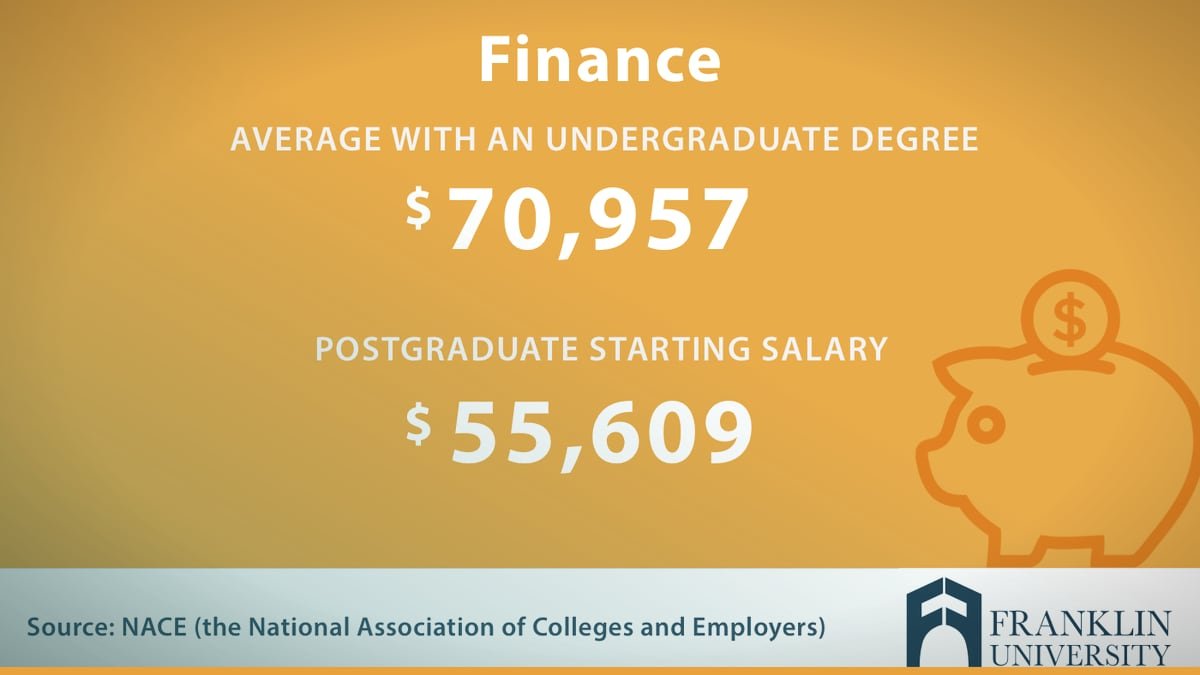
Header image source: Accounting vs Finance Degree: What’s Right For Me? | Franklin.edu via Franklin University via Google — cropped to 16:9 and colour-adjusted.
Key takeaways
- Accounting records past transactions using strict GAAP rules
- Finance uses economic theories for forward-looking decisions
- Finance careers often pay more but demand more strategic judgment
Finance and accounting are not the same thing. Full stop. Accounting is the meticulous, rules-bound process of recording what has already happened—transactions, expenses, revenues—so financial statements can be produced with precision. Finance is the analytical, forward-looking discipline that uses those statements (and other data) to predict, model, and optimize what should happen next: investments, capital allocation, risk management. This isn’t some subtle nuance. It’s a fundamental divide in temporal orientation, methodology, and career trajectory.
The data doesn’t lie. Accounting operates within rigid frameworks like GAAP and IFRS, dictating everything from revenue recognition to asset depreciation. Finance has no universal rulebook. Instead, it leans on economic theories—Capital Asset Pricing Model, efficient market hypothesis—and statistical tools like discounted cash flow models and Monte Carlo simulations. Harvard Business School Online puts it bluntly: finance is about strategic decision-making, while accounting is about compliance and reporting. That distinction shapes everything from the software professionals use to the salaries they command.
Past vs. Future: The Core Divide
Accounting is the historian of business. Every source confirms this. Becker CPA Review describes it as looking at past financial transactions and records. Southern New Hampshire University is even more direct: accounting generally works with existing records and documents. This isn’t a flaw—it’s the entire point. Accounting’s role is to produce accurate, auditable financial statements—balance sheets, income statements, cash flow statements—that stakeholders can trust. Without this retrospective rigor, finance would have no reliable data to work with.
Finance is the strategist. Northwest Missouri State University notes it emphasizes analysis and forward-looking decisions. Frontline Source Group frames it as a contrast: accounting focuses on what has already happened, while finance focuses on what should happen next. This isn’t just semantics. A financial analyst building a discounted cash flow model to value a potential acquisition isn’t verifying past transactions—they’re making assumptions about future cash flows, discount rates, and terminal values. An accountant preparing a tax return is ensuring last year’s revenue and expenses were recorded correctly under IRS rules.
The overlap exists. Both fields rely on financial statements. But accounting produces them. Finance interprets them to make decisions. This explains why finance professionals often work in dynamic, high-stakes environments—investment banking, private equity, corporate strategy—while accountants dominate roles requiring precision and compliance: auditing, tax advisory, regulatory reporting.
Rules vs. Judgment: The Methodology Chasm
Accounting is a discipline of constraints. GAAP and IFRS aren’t suggestions—they’re mandates. Harvard Business School Online highlights this: accounting operates within strict guidelines to ensure consistency. Under GAAP, revenue is recognized when earned, not when cash is received. This rule applies universally, whether you’re a multinational corporation or a local bakery. The rigidity is intentional. It ensures financial statements are comparable across companies and industries, which is critical for investors, regulators, and auditors.
Finance has no such universal standards. It’s a field of trade-offs. Accounting.com puts it well: finance professionals weigh risk versus return, debt versus equity, and short-term versus long-term goals. These decisions aren’t governed by rules—they’re guided by economic theories, market conditions, and professional judgment. A CFO deciding whether to issue debt or equity to fund an expansion isn’t following a playbook. They’re analyzing interest rates, credit markets, tax implications, and the company’s risk tolerance. A portfolio manager choosing between stocks and bonds isn’t verifying past transactions—they’re forecasting future returns based on macroeconomic trends, sector performance, and company fundamentals.
This methodological divide has real consequences. Auditors verify compliance with GAAP. CFOs decide whether to acquire a competitor based on projected synergies. One is about accuracy. The other is about strategy. One is backward-looking. The other is forward-looking. One is rules-bound. The other is judgment-driven.
Tools of the Trade: Precision vs. Prediction
The tools professionals use reflect these differences sharply.
Accounting’s toolkit is built for precision and compliance. ERP systems like QuickBooks, SAP, and Oracle dominate the field. These platforms handle invoicing, payroll, financial reporting—ensuring transactions are recorded accurately and reconciled properly. Tax software like TurboTax and CCH ProSystem fx automates compliance with ever-changing tax laws. The focus here is on accuracy, audit trails, and regulatory adherence. Becker notes that accounting professionals spend significant time reconciling accounts and ensuring financial statements are error-free.
Finance’s toolkit is built for analysis and prediction. Bloomberg Terminals provide real-time market data, news, and analytics for traders and portfolio managers. Python and R are used to build predictive models, backtest trading strategies, and analyze large datasets. Platforms like Tableau and Power BI visualize financial trends and performance metrics. Finance professionals rely on sophisticated models—discounted cash flow for valuation, Black-Scholes for options pricing, Value at Risk for risk assessment. Northwest Missouri State University notes that finance students learn to use these tools to evaluate investment opportunities, manage risk, and optimize financial performance.
AI is reshaping both fields—but differently. In accounting, AI automates repetitive tasks: data entry, invoice processing, fraud detection. Machine learning algorithms flag anomalies in expense reports or predict tax liabilities based on historical data. Human oversight remains critical for tasks requiring judgment—interpreting complex tax laws, signing off on audits. In finance, AI powers predictive analytics: credit scoring, algorithmic trading, portfolio optimization. Machine learning models analyze market trends, predict stock prices, identify investment opportunities. But finance professionals must still interpret these outputs, assess their reliability, and make final decisions.
Career Paths: Salaries, Specializations, and Trade-Offs
The career trajectories in finance and accounting diverge sharply—reflecting their distinct focuses.
Accounting’s specialization is both its strength and its limitation. Roles like Certified Public Accountant, auditor, and tax advisor demand deep expertise in regulations and compliance. Accounting jobs typically require a bachelor’s degree, often with additional certifications—CPA, Certified Management Accountant. The Big 4—Deloitte, PwC, EY, KPMG—dominate the industry, offering clear career paths from staff accountant to manager to partner. But the work can be repetitive, with busy seasons—tax season, quarterly reporting—demanding long hours. Salaries reflect this specialization. A staff accountant earns a competitive salary. A CPA in a Big 4 firm can earn substantial compensation with experience.
Finance’s breadth offers more variety—but also more competition. Careers span investment banking, corporate finance, asset management, financial planning. Northwest Missouri State University highlights that finance graduates study corporate finance, investments, financial markets, and risk management. Roles like investment banker, financial analyst, portfolio manager demand strong analytical skills and the ability to thrive under pressure. Salaries in finance are typically higher. An investment banking analyst can earn substantial compensation in their first year. Hedge fund managers or private equity associates can earn high compensation. But the hours are brutal—long work weeks are common in investment banking—and the career ladder is steep.
The hybrid path is increasingly common. Many professionals start in accounting to build technical skills and earn certifications—CPA—before transitioning to finance. The Chartered Financial Analyst designation is a popular bridge, offering deep training in investment analysis, portfolio management, and financial modeling. This path combines the rigor of accounting with the strategic focus of finance, making it ideal for roles like financial planning and analysis, corporate development, or asset management.
Education: What You Learn—and Why It Matters
The curricula for finance and accounting majors reflect their distinct priorities—no surprises there.
Accounting programs drill into technical skills and regulatory knowledge. Students master GAAP and IFRS, learning how to record transactions, prepare financial statements, and comply with tax laws. Courses cover auditing, tax accounting, managerial accounting, forensic accounting. Accounting students spend significant time learning to use tools for financial modeling and data management. The goal? Graduates who can ensure accuracy and compliance in financial reporting.
Finance programs prioritize analytical and strategic thinking. Students study corporate finance—capital budgeting, cost of capital—investments—portfolio management, asset pricing—financial markets—equities, fixed income, derivatives—and risk management. SNHU notes that finance students learn to analyze financial data, assess risk, and make strategic financial decisions. Courses often include statistical analysis, econometrics, and financial modeling using Python and R. The focus is on developing skills to forecast performance, evaluate investment opportunities, and optimize capital structure.
Overlap exists, but it’s limited. Both majors require foundational courses in economics, statistics, and business law. Finance leans into quantitative methods and economic theory. Accounting emphasizes compliance and technical precision. A finance major might take behavioral finance to understand market irrationality. An accounting major might study forensic accounting to detect fraud.
Industry Applications: Where Each Discipline Dominates
The industries where finance and accounting thrive reflect their core strengths—compliance versus strategy.
Accounting is critical in regulated industries where transparency is non-negotiable. Healthcare, government, nonprofits rely heavily on accountants to ensure adherence to regulations. Auditors verify financial statements. Tax professionals navigate complex tax laws. Frontline Source Group highlights that accounting is essential for ensuring that financial records are accurate and compliant with laws and regulations. Precision, accountability, risk mitigation—these are the priorities.
Finance drives strategy in dynamic sectors where growth and innovation are paramount. Technology, private equity, venture capital are dominated by finance professionals evaluating investment opportunities, optimizing capital structure, managing risk. Harvard Business School Online notes that finance is more strategic and forward-looking, making it indispensable in industries where rapid decision-making is critical. CFOs in tech companies balance short-term cash flow needs with long-term growth investments. Portfolio managers in asset management allocate capital across asset classes to maximize returns.
Public vs. private sectors further highlight these differences. In the public sector, accounting is vital for budgeting, auditing, regulatory compliance. Government agencies and nonprofits rely on accountants to manage funds transparently and ensure accountability. In the private sector, finance dominates capital markets—raising capital, managing investments, optimizing financial performance. But both fields operate across sectors. A CFO in a Fortune 500 company needs accounting expertise for accurate financial reporting and finance skills to guide strategic decisions.
The AI Factor: Automation’s Double-Edged Sword
AI is disrupting both fields—but in different ways, at different speeds.
Accounting’s automation focuses on efficiency and accuracy. AI-powered tools handle repetitive tasks: data entry, invoice processing, bank reconciliations. Machine learning algorithms detect anomalies in financial data, flagging potential errors or fraud. AI can scan expense reports for duplicates or unusual spending patterns, reducing manual review. But human oversight remains critical for tasks requiring judgment—interpreting complex tax laws, signing off on audits. Becker notes that while AI can automate routine tasks, human accountants are still needed to provide strategic advice and ensure compliance.
Finance’s AI adoption is more transformative. Machine learning models analyze vast datasets to predict market trends, optimize portfolios, assess credit risk. Algorithmic trading systems execute trades at speeds and volumes impossible for humans. Robo-advisors provide automated investment advice to retail investors. But finance professionals must still interpret these outputs, assess their reliability, and make final decisions. Northwest Missouri State University highlights that AI enhances predictive modeling but does not replace the need for human judgment in financial decision-making.
Job security in both fields is evolving. Accounting roles focused on data entry and reconciliation are at risk of automation. Those requiring strategic advice and compliance expertise remain secure. Finance roles involving predictive modeling and risk assessment are becoming more data-driven. But the need for human judgment persists. The key for professionals in both fields? Develop skills that complement AI—critical thinking, strategic analysis, ethical judgment.
Which Should You Choose? The Decision Isn’t Binary
The choice between finance and accounting isn’t about which is "better. " It’s about which aligns with your strengths, interests, and ambitions. The evidence is clear: accounting is the foundation. Finance is the strategy. One records the past. The other shapes the future.
Pick accounting if:
- You thrive in structured, detail-oriented environments.
- You enjoy working with rules and regulations.
- You want a clear career path with specialized roles—CPA, auditor, tax advisor.
- You’re comfortable with repetitive tasks and busy seasons—tax season, quarterly reporting.
- You’re interested in industries where compliance is critical—healthcare, government, nonprofits.
Pick finance if:
- You prefer analytical, strategic thinking.
- You enjoy modeling, forecasting, and risk assessment.
- You want higher earning potential and dynamic career opportunities—investment banking, corporate finance, asset management.
- You’re comfortable with ambiguity and high-pressure environments.
- You’re interested in industries where growth and innovation are priorities—tech, private equity, venture capital.
The hybrid path is worth considering. Start in accounting to build technical skills and earn certifications—CPA—before transitioning to finance. The CFA designation is a popular bridge, offering deep training in investment analysis and portfolio management. This path combines the rigor of accounting with the strategic focus of finance, making it ideal for roles like financial planning and analysis, corporate development, or asset management.
The open question isn’t which field to choose. It’s how you’ll adapt as AI reshapes both. Will the next generation of accountants become more strategic advisors, leveraging AI for compliance but focusing on high-value insights? Will finance professionals rely even more on predictive models, or will human judgment regain primacy as markets grow more volatile? The divide between finance and accounting isn’t disappearing. But the lines between them might blur faster than anyone expects.
Sources
- Finance vs. Accounting: What’s the Difference?
- Finance vs. Accounting: Which Path Is Right for You?
- Finance vs Accounting Degree: Which Major To Choose?
- What’s the Difference Between Finance and Accounting?
- Accounting vs. Finance Major: Key Similarities and …
- Finance vs Accounting: Choosing Your Degree & Career …
- Accounting vs Finance: Differences, Roles, and Careers